Some Thoughts on Playing Fate Core in Glorantha
 When I wrote Legends of Anglerre, one of my playtest worlds was Glorantha, one of my all-time favourite fantasy settings. With the new Fate Core, Glorantha becomes even more viable as a venue for Fate-based adventure. Both Glorantha and Fate Core are running Kickstarters at the moment – the awesome Guide to Glorantha Kickstarter here and the Fate Core Kickstarter here – so I thought I’d blog about how you can use one to play the other.
You don’t tackle a subject as big as “Glorantha using Fate Core” in a single post – it’s more properly the topic of an entire book. But, to kick off the discussion, I thought I’d offer a few thoughts about what IMHO is the biggest issue when adapting any rules system to Glorantha – what to do about the magic. I’ll start by talking about my favourite Gloranthan gaming environment (and I know I’m not alone in this 😉 ): Sartar, Dragon Pass, and Pavis – home of the Theist Orlanthi and the occupation by their nefarious foes, the Lunar Empire.
Theism focusses on Runes. Happily, Fate Core can handle that exquisitely, and very simply. Here’s how: when you create your character (let’s say he’s an Orlanthi), select which Runes he’s going to have an affinity with. You could select up to 3 Runes, but as a beginning Fate Core character only gets 10 skills in total, I’m going to choose just two for my character – Air / Storm and Movement.
Now, depending on how I view my character, I can take these two Runes at anything up to Great (+4) in power. But what can I do with them? Well, Fate Core gives you the four actions you can do with skills: Overcome, Create Advantage, Attack, and Defend. Perhaps not all Runes are going to be equally useful for all four actions, but in our notional Fate of Glorantha supplement, we’d have a chapter on the Runes, giving their core uses. So, the Air / Storm rune would let you manipulate the powers of Orlanth (say) to summon winds, blast foes, blow away arrows, and so on.
 In Glorantha, not everyone gets the same access to a god’s powers. In fact, it’s mostly determined by a character’s standing with the god – whether he or she is a lay member, initiate, devotee / rune lord / rune priest, or even hero. HeroQuest and RuneQuest treat these divisions slightly differently; in our notional Fate of Glorantha, we’d have to decide which vision of Gloranthan reality we’d go with. For now, let’s muse about the HeroQuest view of things.
HeroQuest says non-initiates can only use runes to enhance things they can do naturally anyhow. You can use the Movement rune to make yourself run faster, but perhaps not fly – that’s something for initiates to do. In Fate Core terms, that sounds very much like the Create Advantage action – or perhaps even a teamwork action, if you want to help someone else.
That means we can start with a limited use for Runes in Fate of Glorantha – perhaps restricted just to creating advantages, which you then exploit with a different skill (players of HeroQuest may notice this feels a little like an “augment”). Then, we can “switch on” additional uses – magical abilities – using the Stunt rules. So, we could have a stunt called “Initiate”; when you take that, you can now use your Runes to do overtly magical things – Run Like The Wind, Fly, etc (in HeroQuest’s view of Gloranthan reality, this might equate to “using Runes directly”).
Now this is where we have to make some decisions about “Gloranthan reality” – so help me out here, if you have suggestions. Here’s what we could do with stunts:
- Each “cult hierarchy” stunt you take could “switch on” one additional skill action for every Rune you know. So, you could use your “Initiate” stunt to switch on the “Overcome” action for your Air / Storm and Movement Runes, allowing you to make miraculous sprint actions (flying through the air), force open doors and summon rains, etc. Or, if you were of a more martial bent (let’s say you were an Initiate of Orlanth Adventurous), you could instead switch on the “Attack” action for your runes, allowing you to smash into your foes at high speed, fling lightning bolts, and so on. Then, when you take your next “cult hierarchy” stunt (let’s call this one “Rune Lord”), then you can switch on another action, and so on. By the time you get to the top of the hierarchy (Devotee?), then you have all the available four actions switched on for all your rune skills.
- Another way of using “cult hierarchy” stunts would be to have each one switch on one Rune in its entirety. So, your “Initiate” stunt could unlock all four actions for just one of your Runes – let’s say Movement. You could then make Overcome, Create Advantage, Attack and Defense actions for the Movement rune, but you’d still be limited to Create Advantage actions with your other Runes (in this case, Air / Storm), until you took the next cult hierarchy stunt.
You have to make a decision how you slice and dice the underlying Gloranthan reality. At the moment, I’m kind of preferring the second option above – it gives Initiates quite considerable power in a limited area, then broadens it as they advance up the cult hierarchy.
I’ll stop there for today. There are obviously so many things to look at when using Fate Core for Glorantha, even “just” for theism. For example, Feats look like they may make very cool Extras, or even just Aspects; allied spirits, etc, would be cool skill-based Extras, as would cults.
There is indeed a whole supplement (or several) possible for playing Glorantha using Fate Core. But for now – let me know what you think of this first rough treatment of Orlanthi-style theism using the new Fate Core rules. How would you do it? Also, if there’s anything you’d like me to post about next, let me know!
Cheers,
Sarah
Don’t forget – you can find the Fate Core Kickstarter here, and the Guide to Glorantha Kickstarter here.
Fate Core: Creating a Character for Mindjammer 2nd edition
Now that the Fate Core rules are out as part of Evil Hat’s mega-Kickstarter, I thought I’d post one of the characters we’ve been using in the Mindjammer 2nd edition playtest. So, without further ado, may I introduce you to Mayameer K’Soo, elite Space Force 2-pilot!
K’Soo is a xenomorph – an organic life form derived from uplifted animals in the First Age of Space. Before Rediscovery, xenomorphs weren’t considered full citizens of the Commonality, and on many Core Worlds were even considered property. In the Expansionary Era that has become a nonsense, and xenomorphs now find themselves in a wide variety of legal states, depending on their homeworld and place of residence. K’Soo is felinoid, derived from the great cats of Old Earth, and has a genotype divergence of 80, which means she looks mostly human, but with some clearly marked feline features – probably catlike irises, sharpened facial features, and abundant, mane-like hair. She’s also sleek and sensuous, with excellent reflexes, and makes a formidable 2-pilot aboard Space Force vessels.
| Name: | Mayameer K’Soo | ||
| Genotype: | Xenomorph (Felinoid) | Culture: | Commonality |
| Occupation: | Starship Pilot | Apparent Age: | 30 standard years |
| Fate Points: | 2 | Refresh: | 2 |
| Physical Stress: | (1) (2) | Mental Stress: | (1) (2) (3) (4) |
| Consequences: | 3 |
| ASPECTS | |
| High Concept: | Elite Space Force 2-Pilot |
| Trouble: | Irresistible Curiosity |
| Cultural Aspect: | Rediscovering Lost Worlds |
| Phase Aspects: | Sensuous C-Person, Sublimated Predator Instinct, Unfathomable Relationship with the Magnanimous Intervention |
| Game Aspects: | Humanity is Transcending, Ubiquitous Cultural Conflict |
| SKILLS | ||||
| Great (+4): | Pilot | |||
| Good (+3): | Will | Technical | ||
| Fair (+2): | Empathy | Ranged Combat | Notice | |
| Average (+1): | Unarmed Combat | Athletics | Stealth | Deceit |
| STUNTS | |
| Starship Pilot: | use Pilot skill for starship actions |
| Gunnery: | use Ranged Combat skill for starship actions |
| ENHANCEMENTS AND SPECIAL ABILITIES | |
| Skill Chip (Starship Pilot): | +2 skill bonus with Mindscape contact |
| Hyper-Reflexes: | +2 bonus to initiative and dodging |
| OTHER EXTRAS | |
| Space Force Null-Pistol (aspect) | |
| Mindscape Implant (aspect) | |
| The Magnanimous Intervention (starship): Good (+3) Gravity Engines, Fair (+2) Planing Engines, Average (+1) Passive Sensors |
That’s it for starters – I’ll be blogging more about my work on Burn Shift – the post-apocalyptic setting for the Fate Core Kickstarter, next week, and of course much more about Mindjammer 2nd edition, due Spring 2013!
Cheers,
Sarah
Normandy, December 2012
Jeff Wayne’s “new” War of the Worlds
 Jeff Wayne’s musical version of The War of the Worlds was probably the most important piece of music of my childhood – I listened to it over and over again, mesmerized by awesome performances, Richard Burton’s gorgeous narration, the sheer drama of H G Wells’ story. I still do, and still am: the DVD version of the stage show, with the “virtual Burton” floating head, gets regular replays here at Mindjammer Central.
So, I guess any attempt at a new version of Jeff Wayne’s classic would always have an awesomely hard act to follow. Just listening to exactly that new version, now, I’m feeling like I’m listening to “Disco Classics” – like the dance version of Carmina Burana, the electronic 4/4 version of the Ode to Joy, or Mozart’s Requiem on the kazoo. OK, maybe not that bad: it’s still a cracking piece of music which even this hi-NRG version can’t irrevocably tarnish, but it’s certainly lost some lustre here, that life and vitality which made the original shine with such a blinding light. It’s become a little bland. I feel very much like when I heard the Matt Smith Doctor Who theme tune – it’s “okay”, I suppose, if you absolutely have to do another version, but nowhere near as good as the original.
Gary Barlow isn’t bad, especially on Forever Autumn. He has a cracking voice, and it’s great to hear him sing a classic song – though was the double-tracking really necessary? Ricky Wilson – well, he’s following David Essex, and succeeding. Nuff said. Maverick Saber – oh dear. No Phil Lynott, there. Where’s the spittle, fire, and brimstone of Nathaniel? Still, some good ULLAs in the Spirit of Man scene, and of course Joss Stone, probably next to Barlow the best performance in the entire gig – though the role really should have gone to Kate Bush for sheer vocal fragility. And Alex Clare? A bit dry and passionless on Thunderchild, sounding a bit like an understudy.
And Liam Neeson – bless him, he’s trying hard, and he’s a cracking actor, but FFS – trying to take on Richard Burton’s narration head on? The truth is, he sounds like Bono in that floor-wiping sing-off with B B King, When Love Comes to Town. On his own turf, Neeson sounds grand – but here, in the post-Burton context, he’s like a child shuffling round in his dad’s shoes. Lacking Burton’s resonance, gravitas, far too flimsy.
So, on balance, I guess I don’t see the point. I guess it’ll sell like hell – and perhaps that’s reason enough, if it brings this fantastic work to a new generation. However – would it be too much to suggest that Jeff Wayne write a new musical for a different story rather than rehash a 40 year old work? There must be tons out there – The Time Machine, 20000 Leagues, Brave New World.
There. That’s my curmudgeonly harrumph for the week. In my day, etc, etc, etc.
Oh, and bah humbug. 😀
The Fate Core Kickstarter
Four years ago my life as a roleplayer changed forever. Almost by chance, I came across the Fate 3rd edition roleplaying game rules, in the form of Spirit of the Century by Evil Hat Productions and Starblazer Adventures by Cubicle 7 Entertainment. I’d been searching for an ideal ruleset to power my Mindjammer transhuman space opera setting – something which could handle not only dramatic interactions between characters, but conflicts between starships, space stations, governments, and even whole cultures themselves – one of the core themes of the Mindjammer game. Fate promised all these things, and so much more, and I was immediately hooked.
This week Fred Hicks, Leonard Balsera, and Rob Donohue of Evil Hat have launched the Kickstarter for Fate Core, the brand new 4th edition of the rules. And, like Fate 3rd edition before it, the new ruleset promises to be totally revolutionary. Building on the cutting edge narrative and character-driven innovations of Fate 3rd edition, Fate Core offers a richer, sophisticated, and more elegant play experience, polishing the rules mechanics popularised by the previous edition and adding some awesome firepower in the form of new innovations.
At the same time, Fate Core is even more accessible than its predecessor. If you’ve never had experience of games with narrative elements, fear not: Fate Core is very user friendly for the more “traditional” roleplayer, too. Its terminology is smoothly integrated into the RPG mainstream: you have gamemasters and player-characters, NPCs, skills and stunts, and the text is clearly targeted to speak to all kinds of gamer, regardless of experience. It’s clear, concise, and inspiring – and filled with examples of play so you can see exactly how Fate’s award-winning innovations work.
 In Fate 3rd edition, we always talked about the Fate Fractal – how “everything is a character”, and the Fate rules can be used to model conflicts between individuals, cities, organizations, anything you can think of. In Fate Core, that fractal concept now permeates everything you see, to the extent that the simple-looking rules happily “unpack” or “decompress” themselves in a fractal process to fit exactly what you need. The new rules for extras are particularly powerful in this respect: now you can define superpowers, magical spells, magical items, starships, technological gizmos, familiars, sidekicks, even kingdoms and cultures, all using a simple and elegant rules mechanic which keeps your character at the focal point of play whilst imbuing him with amazing flexibility and power.
With the Kickstarter, a single dollar (that’s right – $1!) gets you immediate access to the working draft of the rules. Then, incremental pledges give you more and more, including hard-copies of the final rulesbook and a cool set of expansions and settings showing you just how to employ this mightily powerful yet generic rules-set to multiple genres. It’s a very clear Kickstarter: generous to a fault, and very clearly explaining what you’re getting and when, and all for awesome value.
At some point I’m going to appear as one of the stretch goals. I’m writing a setting supplement called BURN SHIFT – TALES OF THE WOUNDED EARTH. I’ll say no more for now, except to say it’ll be a full-featured setting playable from the get-go, representing a popular and much-loved RPG genre for the new generation of the Fate rules. I’ll post more about it and its genesis further down the road once it’s officially announced.
 So, check out the Fate Core Kickstarter. Please consider pledging – Evil Hat Productions have redefined roleplaying for the 21st century with the Fate rules, providing a sophisticated, multi-layered system which can be as light or as crunchy as you like. It’s also going to power the new second edition of my Mindjammer transhuman space opera roleplaying game, available Spring 2013, and I’m massively excited to be onboard. I hope you will be too!
Best,
Sarah
Normandy, 4th December 2012
Off to Dragonmeet 2012!

I’m heading off to the UK tomorrow for the Dragonmeet convention in Kensington Town Hall, London, this Saturday 1st December. This one day roleplaying game convention is perhaps the cosiest and most Christmassy of conventions – it’s a single day, with seminars, lots of games and demos, and an excellently well-stocked trade hall. For me, it’s my last industry foray before Christmas, a chance to meet up with friends and fellow gamers in very convivial surroundings, and also to check out what goodies are on sale for my Christmas list!
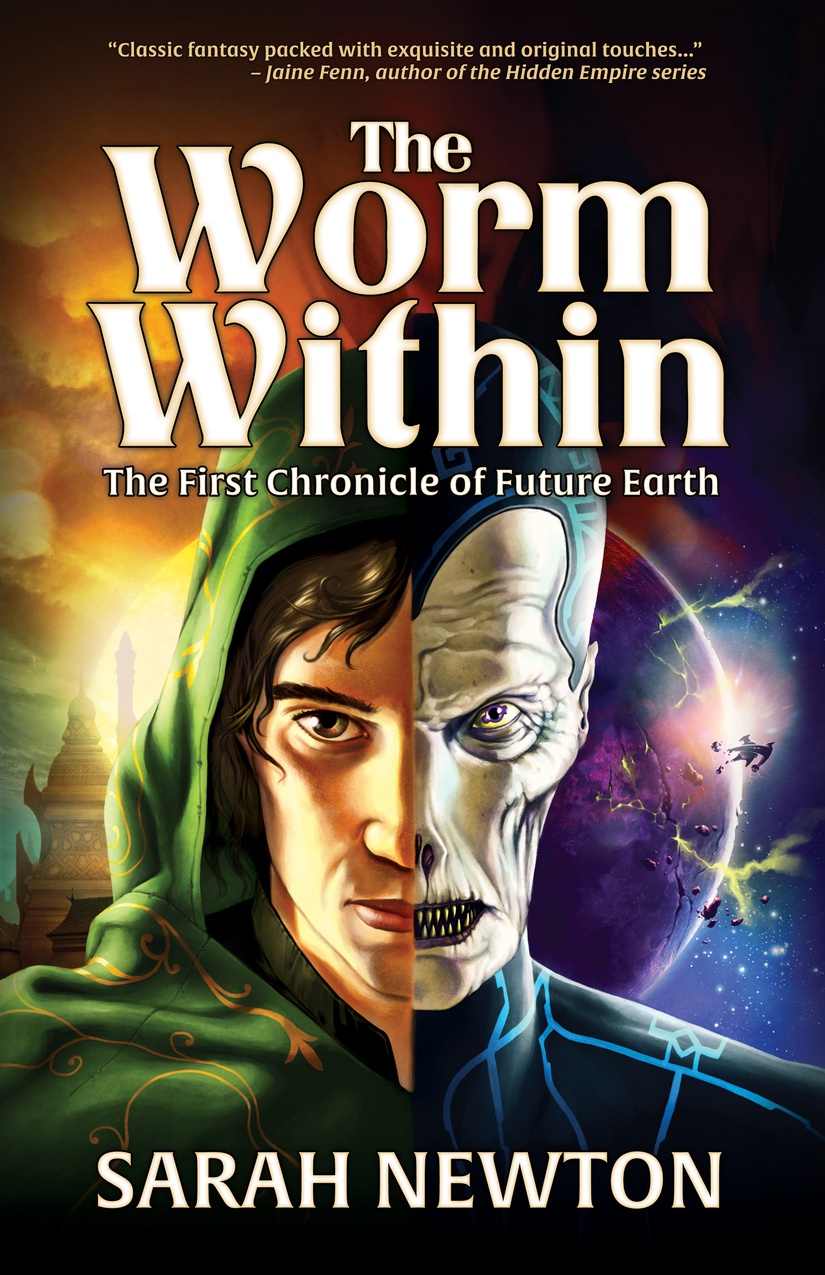
This year’s a bit special – it’s the first Dragonmeet where I’m going to be representing our new small press imprint Mindjammer Press. We founded this last summer to manage and produce RPG and fiction lines associated with the Mindjammer transhuman space opera setting. This Dragonmeet we’ll be on the Chronicle City stall, and will have copies of the Mindjammer novel, and will be handing out leaflets and talking about our upcoming Mindjammer 2nd edition RPG, the bumper complete RPG book of transhuman space opera adventure using the new Fate Core rules, which is due out Spring 2013 (and currently deep in playtest and pre-production), and my new science-fantasy novel The Worm Within, also due next year. We have some big plans this year, including and exciting second Mindjammer Press project, which should give us two (and perhaps three) linked product lines, providing cool cutting edge RPG and fiction products.
 We’re also sharing booth-space with Modiphius Entertainment this year, where Chris Birch will be stocking products from his Achtung! Cthulhu line of Cthulhoid gaming products, including hard-copies of my two Zero Point campaign scenarios, Three Kings and Heroes of the Sea. These are gorgeous books, and I’m really looking forwards to seeing them in dead-tree version at last. Stocks will be limited, so be sure to drop by and bag one!
Dragonmeet is also featuring a host of guests, including Kenneth Hite, Robin D Laws, Graham Walmsley, Ralph Horsley, Steve Jackson, and Ian Livingstone, plus a host of artists and games writers from all across the industry. In particular I’m looking forwards to seeing the physical copy of The Lion and the Aardvark, the anthology of modern-day fables from Stone Skin Press (edited by Robin D Laws). I have a story in it – Death and the Dragon – and by all accounts the physical object is a lovely-looking book.
 If you’re in the neighbourhood, Dragonmeet is well worth a look – friendly, interesting, and lots of fun. If you’re planning on going, stop by and say hi!
I also just found out this morning I may have the chance to drop in at the launch of A Town Called Pandemonium by Pandemonium Books / Pornokitsch, at the Royal George on Charing Cross Road this Thursday, 29th November. Pandemonium have been publishing consistently excellent fiction anthologies over the past year and a half, and this one is a Weird West / Deadlands-style collection which tickles my spaghetti western fancy just right.
That’s it – I’ll post again after Dragonmeet with pics and a convention report. Hope to see y’all there!
THAT Battlestar Galactica Finale (SPOILERS!)
 One of the weird features of living out here in the sticks in France is that our TV and movie consumption gets massively skewed. We tend to gorge ourselves silly on the year’s movies in a 2-week DVD orgy around Christmas, and humongous TV series that everyone watches as they go out on broadcast tend to catch up with us in boxed set format often a year or two late.
The final series of Battlestar Galactica had this in spades. In fact, here at Brown Dirt Central, we just watched the final episodes of that awesome series last weekend – what’s that, 3 years late? And for the past week I’ve been mulling it over in my mind, trying to work out what I thought about it, and put some thoughts down on paper / the screen. These are those thoughts – this post contains tons of SPOILERS – so if you haven’t seen the finale of Battlestar Galactica yet, or simply don’t wish to be reminded, then stop reading now! 🙂
Right – that’s that. I’m assuming everyone still reading is inured to spoilery. So here goes. 😉
First – what were they thinking? Or, perhaps more fairly, what happened? Now I know that the writers’ strike back in 2007/8 had absolutely hosed the Battlestar Galactica production during the first part of Season 4, to the extent that they decided to cut the season short to a mere 11 episodes rather than 22(ish). When watching Season 4, you can just see the tightness of the writing start to creak and slide – the laser focus on characterisation and theme becomes blurred, lots of shots get spent on lingering distance shots or closeups, and a worrying increase in flashbacks to retcon / shoehorn character events and decisions (and even then some of them stop making sense). But even as far as the return of Starbuck, things are still getting pretty darn compelling and messianic.
But then that godawful end to Season 4 – the arrival at earth. Who thought it would be cool to write up the whole thing in one episode, and throw plot consistency out the window? Was it some mad attempt to wrap everything up in 40-odd minutes, just in case they never got the second half of the season after the strike? I guess, looking back on the sheer wonderfulness of the previous 3 seasons, I’m forced to conclude so; I can think of no other reason, for example, why you’d arrive in earth’s solar system, then crack open the champagne and have a mega-party without even, you know, running a preliminary planetary survey! Or even, you know, looking out a frackin’ porthole! “Gee – we’re at earth! Let’s party – we can always check if the cylons beat us to it or if the place is a frackin’ radioactive wilderness in the morning!”
I can forgive a lot for a good story, but that was lame. And it showed on the faces of the cast – they were sacrificing the integrity of the plot and their characters for some unspecified production-led exigency, and it hurt. But, because we all knew it was the writers’ strike, we let it slide. BSG would be back, to wrap up the story, once the awesome writing team was back in harness.
There’s a lesson for all writers in that single event. When the writers turned up for Season 4 Part 2 (“The Final Season”), the writers had a shit-awful job of unpicking that mighty frack-up for the first several episodes. Let’s just summarise for a moment: in one single episode, at the end of Season 4, the series had completely blown its mega-wonderful, awe-inspiring climactic return to the birthplace of frackin’ humanity, and, worse still, had publicly stated it was a lame-ass location worthy of no further treatment – it was a radioactive wasteland, and no one could live there or, gods forbid, film an exciting climax to a wonderful series. Zip. Nada. Zilch. Fracked.
So, the “Final Season” begins with everyone wondering what the frack to do next. Including, presumably, the writers. Now, to give them their credit, they did a good gods-damn job of portraying the survivors’ descent into frustration, pointlessness, and despair – mutinies, suicides, depression, hysteria, pogroms, prejudice, mobs. I’m as sure as hell that paralleled the sense of betrayal they must have felt – that one previous episode closing Season 4 had fracked them so badly.
But this is where I start to wonder. The BSG writers were top notch – awesome stories, great characters, stirring and inspiring themes. It took them a few episodes to recover from the “Boring Earth” frack-up, get Gaeta and Tom Zarek shot through the head, fair enough. But then what happened? Again, the feeling of treading water – the excitement of the mutiny and its denouement got replaced by lots of dithering on base ships, overuse of Dean Stockwell, as though they had one more story to tell – the Daybreak extended finale – and just had to somehow get there. I mean – the final Cylon, Helen Tigh? Really? Was there no idea more exciting than that which occurred to the writers? She was a relatively minor and very annoying character – not that interesting, not that deep – and now she’s carrying the whole show? And slower-than-light travel, previous Cylon rebellions? One episode (“No Exit”, I think) turned into such an infodump I just stared at the screen in bewilderment – too much information, I was losing my way. No! Slow down! Stop telling me the whole godsdamn backstory. Show it to me instead – you’ve got time! The episodes after the mutiny are okay, but feel frequently confused, sometimes hammy, and mostly irrelevant – they could have been spent so much better dealing with a humongous climax to the series.
So that when the climax came – three episodes – it was very much tacked on after the previous plot threads. Suddenly – magic code doodle tune – we get to a new planet, and this one is earth! Okay, it’s damned artificial, almost breaks suspension of disbelief, but I’ll swallow it: after the Season 4 frack-up, the writers wanted their own godsdamn earth to finish the story proper, so they fixed it. Fair enough – I get that. But the padding in those final three episodes? The endless flashbacks, infodumping relationships between Starbuck and Apollo, Laura Roslin and her sisters (huh?), Tigh and Adama? The scene where Adama collapses in an alley outside a bar, vomits all over himself, then stares at the stars with a winning smile, was so frackin’ awful that it reminded me of that classic scene from Team America, and I felt embarrassed that Edward James Olmos had to do that to an otherwise legendary character. It’s kind of like showing Marlon Brando’s Godfather wetting the bed. We don’t need it.
And then: the final episode. I have such mixed feelings about this. In the first place, it was structurally perhaps the best episode in the series (perhaps exceeded only by the final mutiny episode); it provided an emotionally satisfying conclusion to the story. It felt a bit like the end of Lord of the Rings – 45 minutes of mooning about wrapping stuff up, but, hey, I’ve been watching this series for years, I can handle a wrap-up episode, as long as it’s done well. And, by and large, on a structural and emotional level, it was – I felt like I’d been told the end of a story, and I knew how everyone finished up, and most of them lived (or died) happily ever after.
But plotwise? My oh my, was that ever bollocks. What the frack happened? Starbuck? I mean, just vanishing? It’s kind of like Perceval turning up after throwing away Excalibur and finding Arthur vanished… and… roll credits. No Avalon, no mysterious boat, no once and future king. Just… standing in a ditch, dirty, knackered, and tired, feeling confused and a little betrayed.
Were they thinking of another season? I can’t believe that – the “150,000 years later” epilogue seemed to be pretty tight, no room for doubt. So what had happened? Who had rebuilt Starbuck’s viper? Who had rebuilt Starbuck? How had she died? Where had that wacky music come from in Hera’s crayon doodles, and why? Did the magic pixies do it all? Or was it the ghost of Christmas On the Cheap?
To be honest, that bit was just… upsetting. A slight feeling of having been let down. It made no thematic or story logic sense – it was just empty. So many questions, so much promise of cool revelations, and we’re left with a gaping hole and no explanation – on any level.
Hey, I can live with it. I still rate the first 3 seasons as the best scifi TV I’ve ever seen, superceded only by Babylon 5. But the whole Season 4 / Final Season thing just didn’t deliver on that earlier promise, and I’m sorry for all the team who were involved and gave it their best – it could have been so much better. Someone, somewhere, seems to have made a decision with The Final Season, just to get it finished and out there, and I guess they carry the can for turning one of the best scifi shows ever to hit the TV into a compromised and slightly confusing jumble.
You know, we’ve just got word that the Star Wars franchise may be saved for future generations when many of us thought all was lost. I wonder if someone would like to have another stab at a remake of Battlestar Galactica Season 4 / The Final Season one day? I’d be up for watching that…
The Mindjammer Roleplaying Game 2nd edition

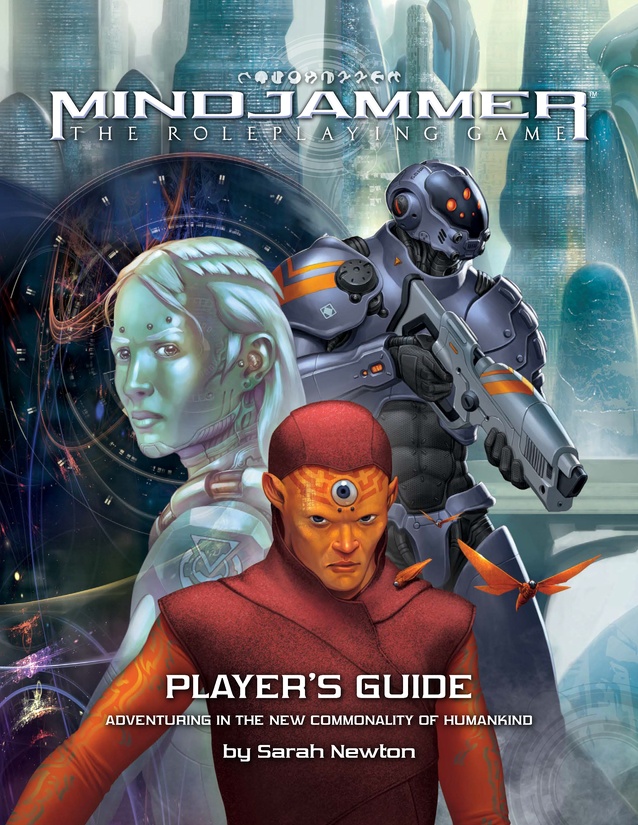
The second edition Mindjammer RPG
The most important thing is that Mindjammer will be a complete roleplaying game in its own right. The slim Mindjammer 1st edition was a setting sourcebook for the Starblazer Adventures game – for the second edition, we’ve given the game a complete overhaul, and brought it in line with the upcoming 4th edition of the FATE Core rules from Evil Hat Productions. We’re very excited with the new system – it’s similar enough to 3rd edition FATE that existing gamers will have no trouble adjusting, while incorporating some seriously cool new mechanics to make it even sleeker and more elegant.
In the end the decision to go with a standalone game was a relatively easy one: the FATE Core rules will be extraordinarily flexible, and the Mindjammer RPG is intended to be a FATE Core game: but it also requires systems for, amongst other things, starships, cultures, planets, alien life forms, and much, much more. We initially specced out the book as a supplement to the FATE Core RPG, but rapidly realised that it would make much more sense to include the core rules in the single Mindjammer volume – we hope you’ll agree. In the Mindjammer RPG, the rules will be tightly integrated with the game’s transhuman space opera setting, providing you with a seamless and focussed FATE game.
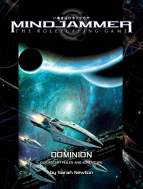
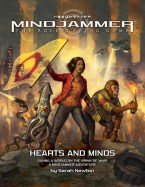
Mindjammer Second Edition will also be much bigger than its first edition predecessor – we’re currently envisaging it to be at least twice the word count, clocking in somewhere around 350-400 pages, and our current intention is to make the core book a hardback, hopefully incorporating multiple colour plates, with successive campaign packs and supplements coming out in softback. There will be a PDF edition, and we hope to offer a special price pre-order bundle once layout is complete. We’ve completely redesigned the starships, organisations, and cultures rules, fleshed out character creation massively, and provided heaps of detail on genurgy, enhancements, synthetics, and the Mindscape. We’ve also been hard at work producing a brand new planetary and star system creation system, incorporating the latest in exoplanet and astrophysics discoveries, which we hope you’ll like. The transhuman element is also everywhere throughout the rules, and we’ve incorporated lots of hitherto unpublished background and setting detail, including a glimpse into Manhome, the solar system of Old Earth, an overview of the Commonality, and a whole new introductory scenario, Hearts and Minds.
We’re in early playtesting at the moment, and expect to go into layout early in the new year, with all new artwork and cartography. Over the next few months we’ll begin to showcase some of the cool elements of the new second edition game – in the meantime, if you have any questions, please fire away here and we’ll do our best to answer.
The Commonality salutes you!
Best,
Sarah Newton
Mindjammer Press, Oct 2012
FantasyCon 2012 (Part Two)
The first part of my writeup of FantasyCon 2012 appears here.
 A feature of this year’s FantasyCon for me was the total disappearance of lunch. There was a one-hour break in the programme, but somehow it never seemed to materialise – what with leaving one event, grabbing a drink at the bar, or just chatting in the corridors or the lounge, that ephemeral 60-minute nibble window was never more than glimpsed at a distance. Instead, Saturday afternoon began with the Solaris / Abaddon book giveaway, where I neglected to queue until the last minute, and so missed out on Gaie Sebold’s Babylon Steele (which I managed to buy later at the Forbidden Planet stand) and Lou Morgan’s Blood & Feathers (which I missed out on the whole weekend – still looking for that one!). However, it was a great chance to catch up and chat, and segwayed nicely into the launch of Magic, Jon Oliver’s “Anthology of the Esoteric and Arcane”, featuring stories by Lou and by Rob Shearman and many others. Solaris do some cracking anthologies – I really enjoyed House of Fear last year, so am looking forwards to getting my teeth into this one.

Waiting for this to arrive right now…
However, at the end of the panel, I had one of those wonderfully precious convention experiences: quite by chance, I got chatting with Jaine Fenn, who I’d only briefly talked to the previous year, and suddenly found myself in an awesome, mutually grokking mind-meld which was utterly inspirational. We chatted for the rest of the afternoon, and, joined by Colum Paget, headed out for dinner afterwards, and only broke up for the FantasyCon disco later that night. There’s a moment when conversations become truly airborne – thoughts take flight, acquire lives of their own, and time vanishes in a luminescent bubble of communication. Saturday afternoon and evening was one such moment, and one I’ll treasure for its perfection of exchange for a long, long time.
I was still pretty much in a daze after that. After freshening up before the disco, I spent a very happy hour chatting with Jasper Kent and Helen Casey in the bar, touching on Russia, roleplaying games, languages, and other favourite topics, before heading off to the FantasyCon disco.
Which was carnage. I hadn’t realised the disco was a new thing for FantasyCon – 2011, my first FantasyCon, was the first time it had happened. Entering its terrible twos, it was loud, flailing, and messy, and enormous fun. I fear my dignified exterior may have slipped slightly during Firestarter, when the dance floor seemed to descend into a tubthumping techno mosh pit, and before I knew it, the lights were coming up, and it was 2.30am. After watching several terrifying entrants in the slow dance competition, I thankfully resisted the temptations of the bar (open till 4am), and staggered off to bed…
 …only to wake at 7.15, after just over 4 hours sleep. Running total since Wednesday: 20 hours. Feeling like my head had been microwaved, I headed off to a reading from Jonathan Green’s Time’s Arrow, which was very entertaining and filled with Parisian mayhem (you can’t go wrong when you blow up major cities), after which I managed to bag a copy of Anne Lyle’s Alchemist of Souls from the dealers’ room and then got to the NewCon Press launch for a chat with the wonderful Ian Whates and a copy of Hauntings, my final planned purchase of the day. I say planned – I had the great good fortune to meet Simon and Lizzie Marshall-Jones of Spectral Press, effortlessly picking up Gary Fry’s The Respectable Face of Tyranny and John Probert’s The Nine Deaths of Dr Valentine. It was great talking to Simon and Lizzie and chewing the cud about things SF and Cthulhoid, and also getting to meet John Probert at last, who I’d become facebook friends with after we’d both written for the upcoming World War Cthulhu anthology from Cubicle 7, the first publishers of my Mindjammer.
Sunday then smoothly entered the Banquet and BFS Awards Ceremony, where I got to meet Ros Jackson of Warpcore SF and writer, journalist, and scriptwriter Gardner Goldsmith, El Grande himself. I discovered Gardner and I shared an interest in libertarian thinking (I come at it mostly from the European, Kropotkin / Morris school), and we both indulged in a cool conversation of conspiracy theorising, which (some of you may know) is a very fruitful pastime of mine. Ros introduced me to her Warpcore SF blog, chocker with book and film reviews, which I can strongly recommend.
As it was only my second time at the awards, I can’t offer any historical commentary, other than to say that the introduction of a bit more tech this year over last was very welcome. Each award was accompanied by an on-screen summary, and a graphic for the winning work. Better still, in cases where the winner wasn’t able to be present in person, there were videos of acceptance speeches instead, which was very cool, and fitted seamlessly into the proceedings.

John Berlyne accepting the BFS Award on behalf of Lavie Tidhar

Rob doesn’t normally have wild staring eyes. I need a new camera.
Cheers!
Sarah
FantasyCon 2012 (Part One)
Wow. Just wow. That was an awesome convention.
I’ve just got back from FantasyCon 2012 – the annual convention of the British Fantasy Society, held this year at the Royal Albion Hotel in Brighton, England. Three-and-a-bit days (if you count the Thursday night meet’n’greet) of genre fiction fandom, where readers, writers, editors, illustrators, publishers, agents, and basically anyone who’s passionate-mad about fantasy, horror, science fiction, weird fiction, and other genre fiction writing gets to hang out in a mindblowing mayhem of sleeplessness and inspiration. What an event!
 This year was my second FantasyCon, and the first where I’ve actually had a novel to talk about – Mindjammer, my transhuman space opera adventure, was published in August this year. My first FantasyCon, in 2011, was very much a fact-finding mission, a brief reconnaissance of just Saturday afternoon and Sunday, a rapid-eye-movement of kaleidoscopic colour which was intoxicating and enticing, but way too short. This year I remedied that by arriving well in time, coming in from Normandy on the Thursday afternoon, and rocking up to the meet’n’greet in the bar on the Thursday night, and staying until the Dead Dog Party on the Sunday afternoon.
I’m so glad I did. FantasyCon is divvied up many different ways: there are readings by authors; panel discussions on topics such as “Has Science-Fiction Caught Up?”, “The Importance of Blogging”, and the ever-youthful “Does Gender Matter?”, which is kind of like having 60 minutes to come up with a viable plan for world peace… one of these years we’ll crack it. There are film shows, book launches, a dealers’ room filled with awesome titles; interviews with special guests such as (this year) Mark Gatiss, Joe Lansdale, and Muriel Grey; and even masterclasses on getting agents, writing for TV, and more. And, alongside and penetrating all this, there is a massive social melee, of people hunkering down in bars, restaurants, comfy chairs and staircases, engaging in earnest discussions of inspiring and thought-provoking topics. The whole thing is a massive genre-literary firework display, in which every attendee is invited to light the blue touch paper in their own brains and burn as bright as they can. Wonderful stuff.
There were so many highlights. So many, in fact, that I’m going to divide this blog into two parts – both to spare you, gentle reader, a blog the size of a complete short story, and also to keep myself sharp as I write up my recollection of events. This is part one, covering all the way to Saturday lunchtime; part two will follow tomorrow.
 As soon as I walked in the door on the first “pre-con” Thursday, I bumped into Mike Chinn, inventor of the Anglerre setting and writer of the Anglerre stories for the Starblazer comic, one of the co-authors of my Legends of Anglerre roleplaying game. Mike and I had corresponded by email several times over the past few years, but this was the first time we’d had chance to meet face-to-face and chat in person. Very cool – Mike gave me some insights into the genesis of the Anglerre setting, and whispered secrets about unpublished Anglerre stories which made me wish that DC Thomson would publish more! Mike was there launching The Alchemy Press Book of Pulp Heroes anthology which he’d edited – very exciting, and it looks like there’s a volume 2 to come!
On the back of that meeting, Mike kindly agreed to do an interview with me here at the Meme Machine blog, and touch upon some of those awesome Anglerre and Starblazer details. Hopefully we’ll get to that in the next couple of weeks – watch this space!
Mike introduced me to Peter Coleborn, Mister Alchemy Press himself, who introduced me to Heide Goody, who introduced me to Colum Paget, and so began the first evening of splendid discussion, food, drink, and generally mind-expanding stimulation. I’d had about 4 hours sleep the night before (this was to become a theme of this year’s FantasyCon…), so I was pretty much running on fumes, but the high-octane conversation of hearing about Heide’s new novel Clovenhoof, an extremely cool-sounding comic fantasy co-written with author Iain Grant, and then off into the realms of science-fiction with Colum, kept us going into the wee hours. I made the tragic error of drinking a white wine spritzer at 12.30am; the tiny, thimblefull of alcohol in the drink triggered my latent tiredness, and I wobbled uncertainly to bed by 1am, rueing I couldn’t keep going longer.
Friday dawned with the first formal schedule for the con – but, even before that, I had the happy circumstance of breakfasting with Tina Rath, actor, author, and all-round polymath and vampire cognoscenta, who I’d met in the hoary, timeless check-in queue the afternoon before, where we chewed the cud and felt our lifeforce drain as the entire convention seemed to be trying to book in at once. Breakfast was more relaxed, and Tina introduced me to writer and reviewer Dave Brzeski and author Jilly Paddock, and we revved up for the coming three days.

Pablo Cheesecake spars with Sarah Pinborough
In the convo with Paul and Nadine I met Janet Edwards, author of Earth Girl, and we swapped scifi thoughts and plans for the coming panels and discussions, including Janet’s appearance in the scifi panel the next day. In fact, the afternoon followed with wall-to-wall panels – my most intense session of the weekend, with panels on “How Important are Blogs?” (answer: very), “Blurring Genre Boundaries” (conclusion: Octopus Tennis is the next big thing), and “Does Gender Matter?” The answer to the latter is: “Wha-? Hang on – well… Yeah… But can I just say -?” *ping* Time’s up! Hell, you could devote an entire convention to just that question – and I guess as long as it’s necessary to even ask, we’ll keep hammering the point home. Generally I got the feeling the panel was preaching to the converted – perhaps from now on it may be more useful to hammer out a manifesto and plan of action for the wider world, rather than re-tread the same path each time. Gender parity was pretty much all over every panel I saw, which was very cool. Progress is being made, and everyone’s backs are to the wheel. A good feeling that we can effect some real ongoing change – although with the current economic collapse, I personally worry about retrenchment. Like I say, you could run an entire convention on just this topic…
 That evening I’d arranged to meet the very wonderful Paco Jaen of G*M*S Magazine for dinner – Paco’s an old friend from another previous life, and a Brighton resident, so we just had to. Before that, however, I gravitated into the bar and met up with King of Steampunk Jonathan Green, who introduced me to the awesomely prolific Cav Scott at last. Cav and I had corresponded over the proofing work I’d been doing on the BFS Journal, and it was so cool to meet in person at last. There too were the charming Vincent Shaw-Morton, wonderful illustrator, designer, and writer, and Kit Cox, AKA Major Jack Union, two time travellers from the late nineteenth century who were in search of exotic creatures to study, document, and (in the case of Major Jack) shoot with a vast array of well-maintained masterwork weaponry. Major Jack’s new book How to Bag a Jabberwock was shown around to general “oohs” and sighs of pleasure – a gorgeous piece, lavishly illustrated, and an absolute must buy for all nineteenth century adventurers. If you like Leagues of Adventure and my Great Game campaign for that august publication, you will want to procure a copy of this gorgeous tome from your bookbinders forthwith.
At the same table I also had the very good fortune to meet Michael Rowley, editorial director for science fiction and fantasy at Ebury Press’ new Del Rey imprint – very exciting! Michael showed me some of the gorgeous covers for his imprint’s upcoming books, a lavish schedule of titles for the next twelve months and beyond, including Mark Hodder’s “A Red Sun Also Rises”, Liesel Schwarz’s “The Chronicles of Light and Shadow”, and others. Michael also had the most gorgeous iPad cover – just like a Moleskine notebook – which as a stationery fetishist I couldn’t help pawing and cooing over.
Nice to meet all of you, gents!
Dinner followed, which turned out to be the venue for a Very Important Event. Yes, gentle reader, I’m talking about JonCon 1. In the same way that the very first GenCon was inaugurated in Gary Gygax’s basement, Friday 28th September saw the very first convention written, performed, and starring our very own Jonathan Green, and a small coterie of hooded conspirators darkly muttering the mantra incantation “hashtag-JonCon” with every utterance. It was at once numenous, ominous, and incredulous. I shall draw a discrete veil over the Cthulhoid climax to the events, only to stop and pause to cry: “Ia! Ia! JonCon the beast in the woods with a thousand young!”
 Friday ended in an insomniac haze, with mad discussions of dissolution and identity in the “top bar” at the Royal Albion (the bit that looks like the prow of the Titanic) with Paco, Colum, and the wonderful Gio Clairval, as we drifted into a stupor matched only by the antediluvian shush of the waves on the beach outside.
So, Saturday. 6 hours sleep, running total since 7am Wednesday: 16 hours. Kick off was the “Fantasy Fiction: Keeping it Real” panel, where Jasper Kent, Juliet E. McKenna, Benedict Jacka, Brent Weeks, and Adrian Tchaikovsky talked about the marriage of magic and realism in fantasy writing. A good discussion, focussing very much on the impact of magic upon character and plot, and the nightmarish plot holes a powerful magic system can effortlessly tear in even the best-crafted worlds. One thing the panel didn’t touch on was the social impact of magic – something very dear to my transhuman sensibilities – and something I feel I’ll be writing about soon. FantasyCon provokes all kinds of inspiring thoughts!
 I attended two readings Saturday morning, an except from Merchant of Dreams, Anne Lyle’s follow-on to Alchemist of Souls, which was intriguing enough to impel me to head out immediately and grab a copy of the first book (a much overdue purchase on my part), and a deliciously grotesque short story by Solaris editor and author Jonathan Oliver, the name of which escapes me. I’m developing a real penchant for Jon’s short fiction: he effortlessly melds a darkly humorous and indulgently grotesque depiction of human failings with a very keen and compassionate portrayal of character, sort of sweet and sour with a strong dash of emetic to catch out those who prefer their literary soup thin. I’ve read several of what I’d call his more literary tales now, and am very much enjoying the sensation of watching over Jon’s shoulder as he peers closely at his characters and tries to work out what makes them tick. I hope these make it into print at some point!
***
Part Two of my FantasyCon 2012 writeup appears here.
Congratulations to the 2012 ENnie Award winners!
 The 2012 ENnie Awards took place last night at GenCon Indy. Although I wasn’t there this year, it was wonderful to wake up to see so many friends and colleagues win awards for some truly brilliant games and RPG-related products.
I was particularly delighted to see Cthulhu Britannica: Shadows Over Scotland win a golden ENnie Award for best setting – another award to add to its growing list! I developed and edited the book back in 2010, next to Legends of Anglerre my biggest single project at Cubicle 7, and a true labour of love. Seeing the awards it has so rightly won since we released it at last year’s GenCon has really brought home how worthwhile the project was, and it’s so gratifying to see so many people saying wonderful things about it. Congrats to Stuart Boon for writing it, Jon Hodgson for inspired art direction and cover, Paul Bourne for a great layout, and of course the heaps of artists for the gorgeous internals.
Massive congratulations also to (in no particular order):
- Kenneth Hite for the brilliant GURPS Horror;
- Pelgrane Press for their awesome Ashen Stars, Cthulhu Apocalypse: The Apocalypse Machine (Graham Walmsley!), Lorefinder, and the Investigators Guide to Occult London (Paula Dempsey!);
- Shannon Appelcline for the required reading “Designers and Dragons”;
- Brennan Taylor for Shelter in Place;
- Pathfinder for their awesome Beginner’s Set;
- Margaret Weis, Cam Banks and the team for the wonderful and inspiring Marvel Heroic Roleplaying;
- Evil Hat Productions, for producing endlessly cool RPGs, including my go-to system, the revolutionary FATE, now approaching its upcoming and much anticipated FATE 3 Core release;
- …and of course a huge thumbs up to Dominic McDowall and Jon Hodgson at Cubicle 7 for the Best Production Values and Best Interior Art on The One Ring – I know how much you guys busted a gut making that beautiful game, and it’s great to see it get the notice it so well deserves.
Congrats to all the award winners. Darn, there are some *cool* games out there! 😀















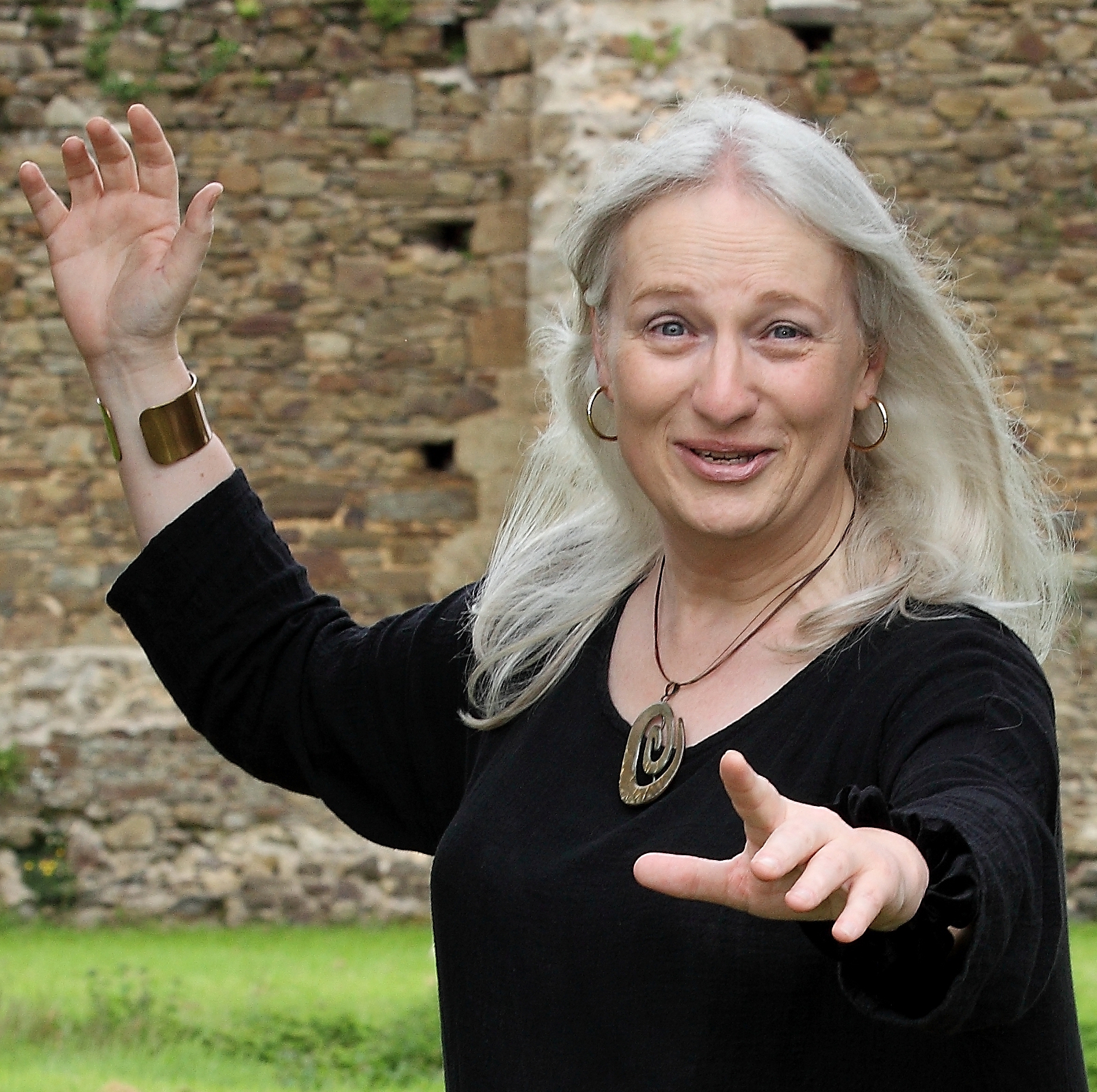
 Sarah Newton