Monsters & Magic – a sample character
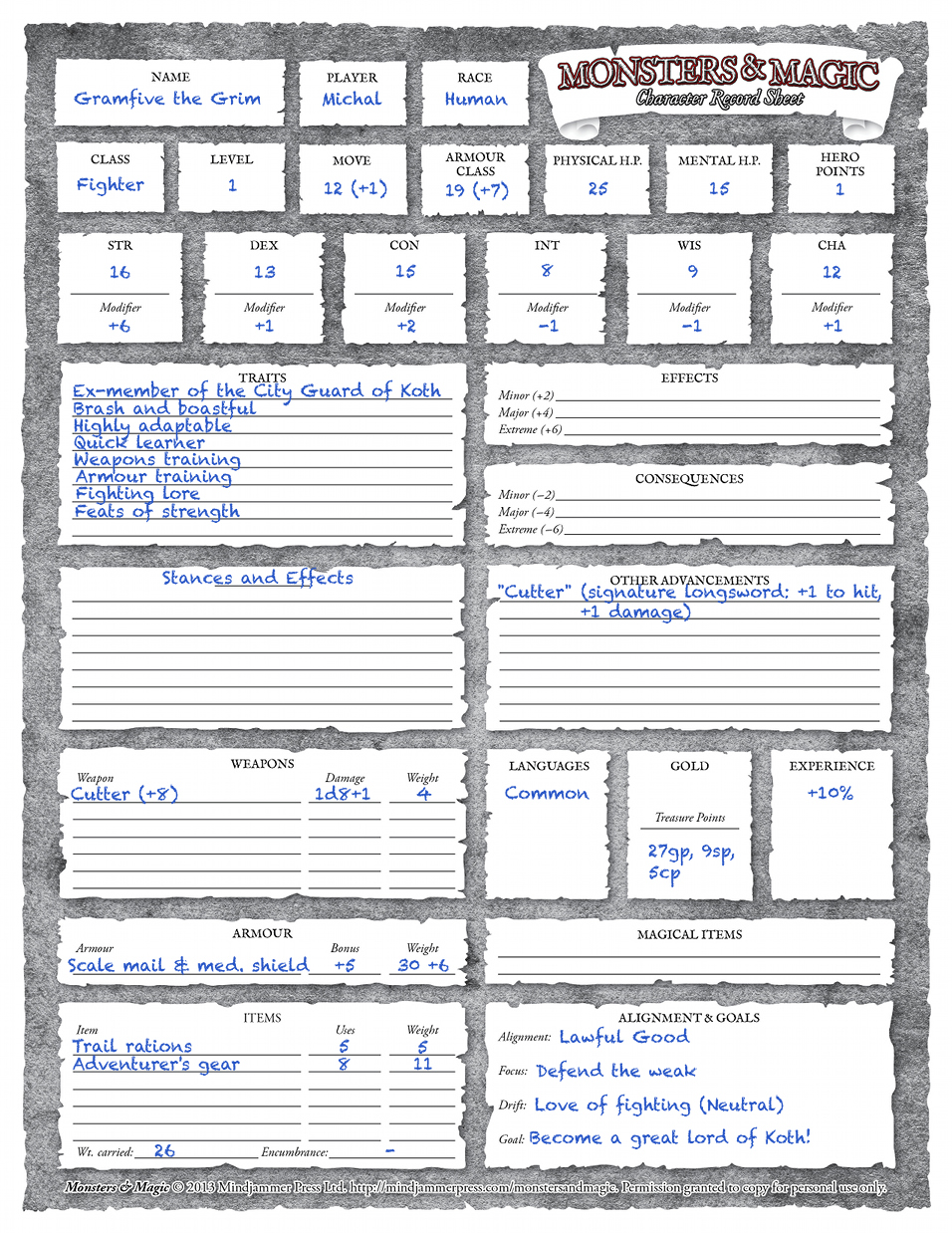
(click to enlarge)
Let’s look at some of the differences. First, you’ll see there are two types of hit points – physical and mental. Monsters & Magic lets you engage in not just physical, sword-and-board combat, but also fear attacks, intimidation, battles of will, debates, social browbeating, madness attacks, and much more. Also, hit points in general are quite a lot higher – conflict of any kind is dangerous in Monsters & Magic, but at the same time PCs are generally more than one-hit-and-you’re-dead mooks, even at 1st level.
Next, check out hero points: that’s a resource that you’ll use for many purposes in the game. Hero points are scarce, but you can gain them during play, and use them to do cool stuff, including determining how you react to a successful attack against you. Effects and consequences are the flipside of hit points – they’re things like temporary advantages, good positioning, tactical perks, wounds, “conditions”, etc, which have a game-related effect. Hit points may measure how far you are from death or defeat, but effects and consequences measure just how your current state affects what you do.
Traits are key in Monsters & Magic – they’re a way of defining your character’s boundaries, what he or she can do. More traits aren’t necessarily better than fewer in any numerical sense – if anything, having more traits broadens what your character can do. A character with fewer traits will be just as competent in those areas as one with more traits. Whether you want more traits is a decision about the nature of your character, not necessarily about how powerful he or she is. You get traits from your character class and race, but also from your personal background choices and also from the decisions you make as you level up.
There’s lots more to say here – check out your alignment focus and drift, for example, for an idea of how your character’s decisions may affect play. But, hopefully, you should feel pretty much at home on this character sheet. We’ve spent the past months writing out some of our favourite old school characters on this character sheet, and running them through our favourite old school modules. Which character would you write up, and which module would you play?
That’s it for now! Come over to our Google+ community if you fancy a chat about Monsters & Magic, or post questions here or at the Mindjammer Press site. See you at the next post!
Sarah
Normandy, May 2013
The Monsters & Magic RPG
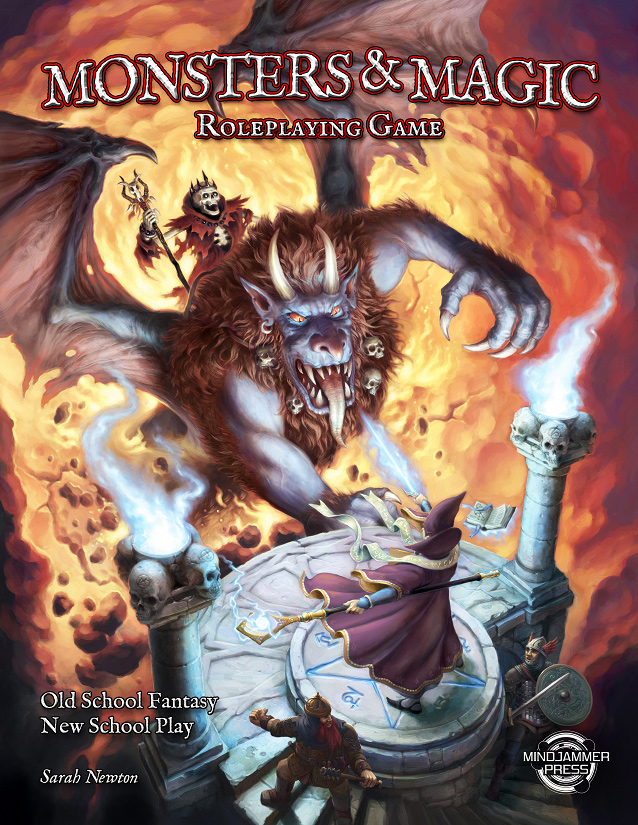
The Monsters & Magic RPG
We announced the game back in March, in a joint press release with Angus Abranson’s Chronicle City, who’ll be producing and publishing the print version of the game. Since then we’ve been heads down playtesting and polishing, and finally I think we’re in a good position to start talking about the game in detail. Thanks for your patience!
Monsters & Magic is a modern-rules fantasy RPG with a distinctly old school flavour. It’s a complete game in its own right – the core book is approximately 80,000 words, and we’re expecting it’ll exit layout between 128 and 156 pages in length. It’s going to be a gorgeous paperback, with all new artwork by such RPG industry luminaries as Jennell Jaquays (of old school Judges Guild and TSR fame, and of course much more!), Jason Juta (Warhammer 40K, Wizards of the Coast, etc), who did that gorgeous cover, Eric Lofgren (Fantasy Flight, Paizo, etc), Linda Jones (Triple Ace, Mongoose, etc) and Gill Pearce (Mongoose, Moon Design, etc). On the writing side I’ve been fantastically supported by our “Monsters & Magic Working Group”, which includes RPG writers such as Ben Monroe, Graham Spearing, Tim Gray, Gianni Vacca, Colin Speirs, Mike Olson, and more; and the layout and graphic design is in the hands of the awesome Michal Cross (Achtung Cthulhu, Mindjammer 2e). We’ve kicked the rules around and incorporated cool ideas for what we wanted this RPG to be.

Old School Fantasy – New School Play
Since our announcement back in March a lot of people have quizzed me about the “old school renaissance” aspect of Monsters & Magic – what that means, whether M&M is an OSR game, and so on. Let me start by saying that its core design concept is profoundly OSR: Monsters & Magic has been written to allow you to play classic fantasy type games, using your classic fantasy resources without having to convert them, of the shelf, as is, with minimal prep. It’s a game I’ve been playing myself for the past 4-5 months in my old Judges Guild campaign – we’ve been fighting giants in the Steading, and pretty soon we’re heading back (via a feast in the banquet hall of Huberic of Haghill) for the City State of the Invincible Overlord itself – and then on to further adventure! All of the things you’d expect to be able to do in that kind of fantasy game, you can do in Monsters & Magic – but you can do more, and that’s where the “modern” bit comes in.
Monsters & Magic uses a rules mechanic we’re calling the “Effect Engine”. Basically, you roll 3d6 plus modifiers against a target number, and the number of points you get above or below that target act as a currency you can spend to take all manner of cool actions. Some are standard actions – doing damage, moving, knocking people over, etc – and some are custom actions specific to your character class or even invented by you as you level up. It’s a simple and yet extensible system.
You’ll find a lot in the M&M rules that’s familiar – there are attributes, modifiers, and hit points; there are traditional character classes, there’s an Armour Class, and there are levels and hit dice. But there are mental hit points, too, and effects you can place on yourself and others, some standard, some improvised, which can give you bonuses or penalties and have other cool game effects. The system is specifically designed to be easy to remember, flexible and permitting lots of improvisation, while retaining a solid “gamist” backbone, non-arbitary and as crunchy as you like.
The Effect Engine OGL
Monsters & Magic will be released under the OGL, and at the moment we’re anticipating releasing the “Effect Engine” as an open license too – just working on the wording of that at the moment. So if you want to write material for the game – and even create your own games using the Effect Engine – you can. It’s a non-setting specific RPG – use with your favourite fantasy setting, commercial or homegrown. If there’s appetite in future, we’re considering releasing further material for the game including expansions, settings, and scenarios. Just let us know.
That’s it! We’ve set up a Monsters & Magic Google+ community for the game, so please stop by and say hi, and we’re be maintaining a Monsters & Magic page at the Mindjammer Press website for game-related information, downloads, and so on. We hope you’ll enjoy the game!
Sarah
Normandy, April/May 2013
“The Next Day” : Bowie’s new album
 The Brown Dirt Cowboy and I listened to the new Bowie album, “The Next Day”, last night. It was quite an experience. The first listen through, we were extremely disappointed; the songs sounded weird, filled with strange and unsatisfying musical decisions, often too short, obscure. I found myself getting angry; this was the man who gave us Ziggy Stardust, Heroes, Hello Spaceboy. What was this stuff? Had he finally lost it, got old, and was chucking out something safe, empty? Well, at least we still had his back catalogue…
Every now and then I could hear sparks of interest – hints that something might be going on that I wasn’t picking up on. Weird resonances from his earlier songs. Tracks like Dirty Boys and Love Is Lost occasionally seemed to rise up – only to get muddled in my head again. Then, after the last track, Heat, Chris said: “That one was good.”
Then the album finished. Nothing like anything of his we’d heard before. We talked about it: was it likely that Bowie, the captain to a generation of space cadets, had lost all his talent and turned out a POS, or could it be that on first listen we were finding it notoriously inaccessible? Bowie’s always been important to us: the BDC was a first generation space cadet in the 70s, turning up at Bowie concerts with the lightning streak painted down his face and dressed like an alien. I was the Ashes to Ashes generation, and didn’t really “get” Bowie until my 5 years underground in Tokyo bashing my head with Heroes. We decided to give The Next Day another listen.
And then another.
The songs opened up. By the end of the third listen of Love Is Lost tears were rolling down my cheeks and my feet were tapping. I started smiling at the lyrics. Yup – it was Bowie. But Bowie as he should be – 66 years old, confronting his mortality and decrepitude, but still the same balls-out honest commentator on his own experiences he’s ever been. I don’t find Bowie an original thinker; but he has a way of encapsulating and expressing the spirit of the time in a mighty powerful and sometimes shocking way, a way that utterly sets him apart and marks him with true genius – a memetic engineer beyond compare. The Next Day is flooded with death and anger; but also weirdness and reflection; and, as it should be, some cracking songs.
I loved it. Fourth listen through, and still exploring. Recommended – but listen to it more than once, and trust the Captain!
Old School Modern – Creating some New Fantasy RPG Rules
 You’ve probably realised I’ve been on an Old School binge since before Christmas, trying out various RPG systems in my hunt for a set of rules which will hit my old school sweet-spot – replicating the vibe and feel of white box D&D and AD&D 1st edition, especially playing the old Judges Guild Wilderlands campaign, but using rules which exploit the modern rules innovations of the past 10+ years, including the cool narrative things a lot of modern RPGs are doing.
What I’ve been looking for is a very simple ruleset which allows me to pretty much use old school material with little or no modification (stats, spells, scenarios, magic items, equipment, etc), and which replicates the structure and feel of white box D&D or AD&D 1e and the old school tabletop experience – the same kind of dice, minis if you want them (but not mandatory). I want it to use the “good ole” D&D terms – the same attributes, hit points, levels, experience points, alignments. It needs to have the narrative flexibility of games like HeroQuest, where you can simply say “I try to do this” – whatever “this” happens to be – and the rules support it, but the narrative element needs to be “diallable” – you can use it as much or as little as you like. It needs to be a solid “game system”, ie not rely on GM fiat for resolution. It needs to cope with character personality, alignments, social, mental, and physical conflicts, contests, but to do so “invisibly”, behind a very simple mechanic. That simple mechanic needs to be fractal, so you can unpack it to do all manner of sophisticated stuff, but you don’t have to. And, finally, it needs to be very simple – no more than a few pages for the system, easy to learn in a single sitting, use without reference to the rules.
Well, yesterday I decided to have a go at rolling my own. I’ve been writing settings and scenarios for years for publication, but I’ve never actually sat down and designed a roleplaying game. So I guess it’s about time. 😉
I’ve got about 6000 words in the past day or so: the core mechanic, basic D&D-style classes, how to handle most in-game events, and so on. I ran off a character sheet in Excel (you can see a PDF here – tentatively dubbed Monsters & Magic, because, well, it’d be rude not to alliterate), and converted our Dungeon World characters from last week to give the system a test drive, which we did this afternoon.
We finished an hour or so ago, and had a blast. We started with the PCs – minus Xiola Zenwaith, the elven wizard who fell in battle with the hill giants and dire wolves at the climax of the previous (Dungeon World) session – recovering in their hidden cave outside the Steading of the Hill Giant Chief, had to avoid hill giants and dire wolves searching for them, and snuck into the caves beneath, encountering carrion crawlers, troglodytes, and orcs.
First realisation: a bug in the system was making it way too lethal! Dungeon World‘s “difficulty level” allowed 1st level players to handle the Steading; the new system is as unforgiving as D&D, but also had a glitch in the “one roll” design that made damage potentially very high, to the extent we lost Shamira Sunfire, cleric of Mitra, to the carrion crawlers quite early on, and almost lost Pook i’the Hood to an orc ambush slightly later (although dousing torches was a foolish idea!).
I’ve fixed the lethality – essentially capping weapon and attack damages to the maximum for the weapon you’re using – and the old D&D 0HP = death rule has been replaced with the AD&D negative HP = bleeding out rule, which is less harsh but still flavoursome. The XP awards seem to feel reasonably okay – maybe a bit generous, but nothing too tricky right now, so I’m keeping them. The PCs had 2 fights and several skill challenge type events, plus, after losing another PC (the cleric!), there are now just 3 of them; a total XP award apiece of 400-500XP felt not too high.
The action system is agreeably crunchy while being very flexible and able to narrate whatever you want, although I still need to simplify the “special effects” rules and sharpen the “failure is interesting” focus somewhat – it’s still a bit too binary (there were a few “you fail *CLUNK*” moments when things threatened to grind to a halt), and the ripostes were again a bit too lethal, but I’m polishing it. The “critical hit” special effect was very cool – Gramfive the Grim chose to slash off one carrion crawler’s paralysing tentacles in lieu of doing full damage, which felt very tactical, removing its special attack in exchange for prolonging its life a bit.
The “mental damage” rules worked very well, though I need them more granular – the bard terrifying the orcs with a brandished (and suddenly lit) torch was extremely effective, possibly too much so!
We left the scenario with the party in the tunnels and warrens deep beneath the Steading, having encountered some orc guards. We discussed leaving for civilisation to rest up and maybe recruit some new PCs – but for now we’re going to proceed another session in “stealth recon” mode to see if more intel on what Nosnra is up to can be gathered before hightailing it back across the Howling Hills to Haghill. We’re aware that G1 is now way overpowered having switched from Dungeon World to a more D&D-emulating ruleset, but we’re also keen to keep the narrative flow without breaking out into metagaming just yet. The City State and the Wilderlands of High Fantasy await!
Back to Mindjammer, The Worm Within, and Burn Shift tomorrow – but hoping to playtest Monsters & Magic more next weekend. Hopefully then I’ll have something to distribute to you good people for comments! 🙂
The second edition Mindjammer RPG
I’m deep down in the New Commonality of Humankind this month, doing the final write-through of the upcoming Mindjammer 2nd edition RPG, due out spring 2013 and using the new Fate Core rules. I mentioned late last year I’d try to post updates and peeks – so here’s a look at the character creation guide for the hominid genotype the Chembu, the genurgic enhancement specialists of the Commonality (you may recognise them from General Ulgus in the Mindjammer novel). I hope you like it – and of course there’s lots more to come in the bumper 300-page hardback in a few months!
*****
HOMINIDS (HOMO VARIENS)
Hominids derive from human stock which through genurgy or genetic drift have become separate sub-species. Some are far removed from their human ancestors. Four hominid species — the Chembu, Javawayn, Hydragand-Dezimeer, and the Viri — are presented below; you can find others in Chapter 17: Alien Life and Chapter 20: The Darradine Rim.
Chembu
Base Cost: 3 aspects, 1 stunt
The Chembu are genurgists — specialists in genurgic enhancement — and the managers of the Chembu Genurgy Corporacy (page XX). Their homeworld is a water-world inhabited by a bizarre organic global mindscape-analog, which welcomed the original colonists (after some horrific initial misunderstandings) into its “mass mind”. Known as the “Planetary Intelligence” or just “Chembu”, it’s connected to the Mindscape, although its thoughts are too alien for most people.
Before the colonists’ arrival, the Planetary Intelligence lived by genurgically modifying its environment; the Chembu hominids now have a symbiotic relationship with it, a phenomenon with significant philosophical ramifications. It has sensory, communication, and manipulative organs best described as “psionic”, whose powers the Chembu have been unable to replicate.
The Chembu themselves are genurgically-enhanced waterworld dwellers (see “Genurgic Enhancements” on page XX). They appear “streamlined”, with hairless, dolphin-like skin, lungs and gills, and other modifications. When creating a Chembu character, you may use your character aspects, skills, and stunts to buy genurgic enhancements as well as your extras budget.
| Chronological Age: | 40-60+ |
| Apparent Age: | Mature adult |
| Typical Occupations: | Corporacy Mercantilist, Diplomat, Genurgist |
| Typical Enhancements: | Extended Lifespan |
| Mandatory Extras: | Gills, Mindscape Implant |
| Flaw: | Weakness to hot, dry conditions |
Genotype Aspects
You must take at least 1 of these.
Commune with the Planetary Intelligence
Chembu is Mother, Chembu is Father, Chembu is All. No human can understand the all-encompassing love that is the commune with the Planetary Intelligence.
- Invoke: To succeed at a recovery obstacle for a consequence caused by mental stress; resist coercion or intimidation; gain knowledge which may be known by the Planetary Intelligence (similar to Mindscape exomemory — see page XX).
- Compel: To be lost or susceptible to coercion or suggestion when out of contact with the Planetary Intelligence; be lost within or distracted by the massmind of the Planetary Intelligence.
The Individual is Nothing: the Group Mind is All
You may look like an individual, but in many ways you’re not. There is only one Chembu.
- Invoke: To gain strength from the knowledge that you’re not alone; share knowledge, feelings, perceptions; communicate effortlessly with Chembu.
- Compel: To have difficulty understanding individualism; act counter to your own individual interests if it benefits Chembu; be distracted by the Group Mind.
Nature is to be Improved Upon!
The Planetary Intelligence improved you; now it is your mission to improve the cosmos, one being at a time.
- Invoke: To find and take advantage of flaws in a naturally evolved being; gain a bonus when creating, understanding, implementing, or repairing a genurgic enhancement.
- Compel: To act superior to lesser beings; stumble upon a flaw in yourself; point out a flaw in others, or attempt to fix it.
|
The Planetary Intelligence The Planetary Intelligence is perhaps the most remarkable being ever encountered by humankind. The biosphere of the world of Chembu exhibits emergent properties which aren’t reducible to its constituent organisms; in effect, the whole planet is a single organism, alive and conscious in ways which its constituents — including the genurgically modified Chembu hominids — aren’t able to comprehend. All organisms on Chembu appear to be attuned to the emergence and maintenance of the Planetary Intelligence — in essence, every plant, every animal-analog, acts as though it was an organ or computing constituent contributing to the Intelligence’s whole. Commonality scientists theorise that’s exactly what they are — that, at some point in the distant past, the predecessors of the Planetary Intelligence reconfigured all the life forms on their planet to act as nanomachine assemblies, giving birth to a single, planetwide organism. |
|
Bioships The Chembu aren’t the only “children” of the Planetary Intelligence. Since First Contact, the Planetary Intelligence has worked with the Commonality to create the Bioship Fleet — interstellar vessels comprising mechanical components mixed with organic material hybridised from mixed human and Chembu stock. The Chembu bioships are amongst the biggest of the Commonality’s citizens: vast cyborg bio-mechanical starships, the oldest can be as much as ten kilometres long. The first bioship, with an incept date of 244/77, is Planet Seed 1; now over 115 years old, it’s 10.5 kilometres from end to end, and still growing… |
*****
That’s all for now – more to come! Let me know what you think – and fire away if you have any questions.
Sarah 🙂 x
Short Story: The Clockwatcher

* * *
THE CLOCKWATCHER
by Sarah Newton
When I remember my life before I met the clockwatcher and the days since I have known him, it seems to me that they belong to two different worlds. The quality of the light from morning to dusk, even the way the rain falls, all seem different to me now. It is as though something vital in the intricate mechanism of my being – some spring, some polished brass cog – was wrenched from me in the time we spent together, and I have never been able to replace it.
“You’ll catch cold, you know. You should come inside. The television said there might be rain.”
My wife worries about me. In a way, it is all she can do for me now. But she can never know how it is now that I perceive her – how sometimes her movements about me, in our house and in the garden, seem to me to slow down until she is moving in a translucent, gelatinous medium where I can see the words begin to form upon her face what seems to be an age before she speaks. I can trace the movements her hand will make in the air as she moves to sweep a loose strand of hair from her face, as she always does – and the movement my eyes trace in the air like burning vapour trails are always precisely right. And she can never know how sometimes a day passes for me in the blink of an eye, how her existence is palpable to me then only as a vague presence, a slight hummingbird blur in the air as she vibrates hysterically through the daily rituals which make up her life.
It was never like this, before. No, this shift, this change in the texture and consistency of time, I blame entirely on the clockwatcher.
It was during a holiday in Stockholm in the late autumn several years ago. My overriding impression of that city is one of culture; streets and squares bearing names like Polonius and Pleiades, where shops front onto mediaeval plazas and caryatids frame whimsically stuccoed doorways in damp black stone. I remember rain, and the smell of coffee, and my surprise at the thought that this was not a city of conifers and perpetual snow.
My wife and I had arrived together at Arlanda, and there, apart from a brief taxi ride to the town, was where our companionship ended. We had booked a room in a tiny hotel in the old town, a place down a cobbled alleyway which had been a printer’s in the Middle Ages. It was Spartan, and despite its antiquarian façade quite modern, with – to my disappointment – not even the barest trace of the smell of centuries-old ink or a lovingly hand-carved letter from a printing block sandwiched between the warped floorboards beneath the bed. Or beneath my wife’s, for that matter – for she and I had long ago realised that for either of us to have any chance of enjoying the life we were to spend together, the sooner the better that we would abandon the futile and unhappy attempts married couples make to force their preferences and interests on one another, and at the same time to compromise those selfsame interests in their efforts to appear egalitarian – compromises which invariably leave both sides with a sense of wounded injustice and a thorough and abiding resentment. No, we had separate beds, separate mealtimes, and separate lives.
So, let me tell you about the clockwatcher. But as soon as I say that, of course, we must both – you and I – realise that the task I have set myself is impossible. For I can never convey to you the truth about the clockwatcher – his is an essence which can only be experienced, which must cover your being and set hard and firm and total to petrify you like those odds and sods – old boots, hats, umbrellas – you find hanging calcified from the rocks in a dropping-well.
I first met the clockwatcher by the water’s edge in Stockholm. By the bridge, where classical stone promenades scythe unbearably straight shorelines topped with white globe streetlights down into the cold black water. He was standing by a shop front – one of the many which line those wide stone pavements – staring at the display. It was November, and every window of every shop and house bore the traditional triangular candle decoration – like a menorah in reverse – which spoke of Christmas.
I am tempted when I speak of him now to ascribe to him a supernatural appearance – to suggest that miracles and wonders, disasters and tragedies, followed upon him, that he stared with feverish red eyes when he walked. But it was an inauspicious meeting. I saw him standing, and staring, and so I stood next to him and looked at the display.
He obviously felt my presence, and shuffled uncomfortably, and I turned and spoke to him in the camaraderie of people meeting in foreign places. Just a couple of words – something about the cold, perhaps, but he turned his entire body to face mine and stared at me in amazement. He mumbled a few unintelligible words, and then brushed past me so quickly and so close that he thumped my shoulder with his. I turned round to apologise to him, but he did not look back. He walked off down the stony promenade, and was gone, lost in the shadows.
I thought nothing of it at the time.
“Why were you staring at the candles?”
“Candles? Yes… that’s right… I was… Candles – that’s what stopped me, you know.”
“I’m sorry?”
“Those candles. I could hardly pull my eyes away. If it hadn’t been for you… did you notice they were electric?”
I confessed that I had noticed, but apologised for not being able to follow his train of thought.
“Those candles never flicker,” he said – and his eyes flicked up to me with an urgency even I could not miss. “They never waver, the movements of the air never affect them. They simply burn – with a cold light. Christmas candles!” he coughed out a laugh, looked away for a moment, then back at me. “They say they symbolise the coming of Christmas – but when you look at their steady flame, you lose yourself in their light. Nothing changes. When you saw me – the other night, yes?“ he looked at me expectantly, and I nodded to show that I had understood. “I was lost to myself. When you spoke to me, it was like a weight pulling my eyes away from their light. And I realised I had absolutely no idea of how long I had been standing there. It had been day when I walked along the promenade. When you woke me, it was already night.”
We had met-–totally by chance – for a second time in a beer house close to the opera. I had entered first – I had taken to late night walks around that part of the city, and loved the lights and the silence of that ungraspable length of time which holds the earth after midnight – and I had sat down at a small table where a tiny waxy remnant of candle sputtered fitfully, and ordered a beer. I recognised him instantly, but I thought better of interrupting a man who had fled from me so brazenly and inviting him to sit at my table for a drink, and I kept my silence.
I watched him as he entered. I guessed by his actions that this was the first time he had been there. The door opened the wrong way, and he spent several seconds trying unsuccessfully to pull it open (I had been prey to the same mistake), and, when he did enter, he stumbled on the step before raising his head to nose around the room and ascertain the location of the bar, the table, and – most importantly, as it turned out – its patrons.
He saw me instantly. There was no flicker of recognition on his face – but with an expression of absolute disinterest, even thoughtlessness, he made his way unerringly towards me.
He sat down at my table, saying nothing, and instantly took my lighter in his hand and began flicking it into life and extinguishing the flame, flicking it into life and extinguishing the flame. His eyes never once left what he was doing.
“I surprised you the other day.”
I laughed, a little nervously, perhaps. “I thought it was I who had surprised you…”
“Do you always speak like that?”
“I’m sorry?”
“So properly. In well-formed sentences. It sounds like you’re reading a script.”
“My name’s George.”
“Mm?”
“George.”
“Oh. Yes, right. Simon.”
“Simon.”
He nodded. “No, but it does, though. You speak beautifully, but it sounds like you’ve rehearsed everything you say. It means you’ve got potential.”
“Potential for what?”
He smiled. “What did you think of those candles?”
I laughed, incredulous. “You’re still talking about those damned candles? You know, I haven’t given them a second thought… I suppose I liked them, if you must know. But you don’t, though?”
His lip curled. “No. I despise them. But don’t think that makes us different, though. I haven’t always hated them.”
“So what happened?”
“You’ll see.”
I raised my eyebrows, smiled slightly.
“No, you will. I can see it in you. And I can tell you how it will happen, too, if you like.”
I can remember now how I smiled at him when he said that. I remember having the feeling of being at a fair or some such place – of him being a thick-moustached gypsy woman shrouded in brocade and incense, reading my palm and uttering with awestruck eyes terrifying portents about my future. And – although it seems incredible to me now the lightheartedness with which I did this – I indulged him. “Yes, of course,” I said, and smiled.
He looked at me with obvious distaste. “It will happen when you are writing. I don’t know whether you write now or not, whether you are a writer. But there will come a time when you will. And – one day – as you sit there with your pen in your hand and stare at the paper, it will happen. The words which you are thinking of, which you think you are about to write, will suddenly become absolutely clear to you. Visible. Like invisible ink, like a candle under a paper filled with words written in lemon juice, every letter of every word will suddenly burn into visibility on the paper before you. In brown, faded letters, like words written by you long ago, and it will seem to you that you will never write anything original again. You will just be tracing dead words, words written on the paper long ago. That is how it will begin.”
I had been silent all through his monologue, and, now he had finished, he sat back slightly and raised his eyes to mine, and saw the look on my face, the way I was staring at him. He smiled, bitterly.
“I’m sorry. I didn’t mean to be so ruthless.”
I was surprised at his use of the word “ruthless”, but now I understand that it was the right word to use. Over the next days I felt myself gradually denuded, like a tree which loses its leaves, little by little, with every gust of wind in autumn – and I began to have an inkling of the sadness life might have in store for me. A dry, desert sadness – the sadness of lonely places, the desolation of feeling abandoned among crowds of people. The sadness which hits you when the camera of your vision zooms out and shows you in perspective from above – a still point of motionless silence when people and the world whirl about you in a bustle of frenetic human energy.
We took the boat home from Stockholm. For some reason I could not bear the idea of flight, and on the way back for the first time before my wife I wept. She stood there beside me in a numb and impotent silence, and I remember how the fingers on her hands curled and uncurled as she seethed against her helpless inactivity. We stood by the grimy window of a corridor door and I stared out at the rain-lashed deck, and it seemed to me that the salt-water which spattered the glass and blurred the outside world was like the tears I shed against the smeared surface of my eyes.
She finally left me, turning and fleeing for the less-complex motions of an afternoon in the ship’s lounge, and I stayed there alone, my shoulders occasionally racked by sobs and my feet rolling and pitching with the deck. One hand steadied me on the corridor rail, and the other from time to time pressed against the glass as I strove to peer through the driving rain. I stood aft, and it seemed to me that when the seething waves behind the ship were right, I could make out a shape on the water, like a crow, a bird, a torn flag or a black cloak, flapping and fluttering in the storm, and I knew it was the clockwatcher. I thought of fleeing to the front of the ship, but the terrifying thought that I might see the same shape there, too – waiting ahead – paralysed me and left my mind blank with fear.
I was still possessed with the same thought which had haunted me since the final days of our holiday – the dreadful uncertainty that maybe I had seen the clockwatcher one more time before we left Stockholm. It had been a week before Christmas, and our suitcases already lay half-packed on the hotel floor. I had been walking with my wife on a wet and dreary night through the old town, when the night sky seemed low and heavy with a thick burden of cloud which hid the stars and left the old stone walls slick with water. The air had seemed so close it had muffled the music until we entered the cathedral square. My wife had smiled and pulled my hand forwards to the quartet which against all odds had set up by the gates and played carols to passers-by with collars turned up against the damp and the cold. But I had pulled back, and it was only when my wife turned to me and saw the look on my face that her smile fell.
It had to have been the clockwatcher. It had to have been. I regret with all my heart now – and I will always regret, I know – that I had not dashed forwards and dived through the musicians and dragged him out from the shadow into the streetlight to stare hungry and demanding into his face, but I did not. I stood there, and my eyes and my mind traced the holes in his figure made by the shadows and painted in the lean, haunted face of the clockwatcher.
He held and played a violin – and it is this I cannot forget. He played one note, over and over again, and his entire figure stood rigid and immobile, with only his arm gripping the bow and sawing out that relentless, plaintive cry. It was a note which ran through every melody they played, a thin, shrill, reedlike background to the hurdy-gurdy fugue of life. While the other three men moved and swayed in giddy animation to the music they played, only the clockwatcher was still, no musician but a harbinger of the dreadful still silence which permeates – and, at times, drowns out – the whole of human creation.
I wanted to stop my ears, to turn on my heels and run away footsteps clattering down the hysterical, hollow streets. But I stayed by my wife as she listened, my hand gripping hers and the muscles in my cheeks sliding rictus-like over one another, and I knew that she heard not the blind, impassive note I heard, but the obscuring, interweaving melodies of the surface of the world, and in some desperate way, I envied her.
I know now that I will hear that note forever. I know now that the sight of any light other than a madly flickering candle will forever fill me with a sense of almost physical revulsion. And I know that I shall never write again. Not truly write, for a dreadful prescience now afflicts me, a perspective of undeniable certainty which chants to me the hopeless, despairing dirge that every move I make, every sound I utter, every word I write, is not mine, but is a note in an abysmal symphony, one step further in a sick and cynical dance which I have not created and over which I have no control. And the image in my mind’s eye of a ship out of Stockholm makes my nails gash holes in my palms and my eyes squeeze out tears like blood.
I sit at my desk, words unwritten waiting on the page before me. My pen hangs, motionless. I watch the clock, and the minute hand moves. And it makes me weary.
THE END
Dungeon World – A Handful of Giants…
 It looks like we’ll be playing our third session of Dungeon World this weekend, adventuring through that hoary old AD&D classic, G1 – Steading of the Hill Giant Chief. I’ll write up my thoughts on that when it happens, but for a bit of Friday fun I thought I’d offer up some of my Dungeon World conversions of some of the critters and opponents our intrepid heroes meet in Nosnra’s lair. Today I’ll focus on the giants – next time I’ll look at their minions and some of the other monsters in the caverns beneath…
In the stat blocks below, I’ve tried to focus very carefully on the Monster Moves, as that seems to be a key part of judging the difficulty of critters in Dungeon World. However, I deliberately haven’t mentioned a Move for their main method of attack – I’m assuming that GM Moves like Deal Damage are plenty enough to handle the occasions when hill giants bash heads with their enormous wooden clubs. You’ll also notice I’ve preserved the original alignments – I’m playing in the Judges Guild City State / Wilderlands of High Fantasy Campaign, so it’s made sense to stick to those, for critters at least…
CLOUD GIANT
Group, Huge, Intelligent, Organised
| Great Club (d8+3) | 14 HP | 1 armour |
| Reach, Near, Far, Forceful | 18′ tall | N (NG, NE) |
| Special Quality: | Rarely surprised |
| Instinct: | Dominate everyone |
| Cloud giants have blue-white skin and silvery white or brass-coloured hair. They usually reside in crude castles built on mountain tops, surrounded by treasure: they have a particular love of jewellery. They often have spotted lions as guards, although cloud giants themselves have a keen sense of smell, and are rarely surprised. One in ten are very intelligent, and build castles on magical islands of cloud instead of mountain tops, and often have magical powers such as levitation. |
| Moves | |
| Smell out prey (“Fee fi fo fum!”) | Throw something |
| Catch missiles | Be cunning or clever |
| Levitate self and treasure (clever giants only) | Send spotted lions to attack |
FIRE GIANT
Group, Huge, Intelligent, Organised
| Huge Sword (d8+3) | 14 HP | 2 armour |
| Reach, Near, Far, Forceful | 12′ tall | LE |
| Special Quality: | Impervious to fire |
| Instinct: | Rule tyrannically |
| Dwelling in castles or caverns, these huge broad-shouldered giants have coal-black skin and flaming red or orange hair, with deep red eyes and yellow-orange teeth. They look almost dwarf-like, if not for their huge stature; they wear armour of mail or dragon hide, and use huge swords. Fire giants have a great affinity with fire, and are impervious to its effects, often using it to attack their foes. They often have hell hounds as pets and guards. They wear armour of mail or dragon-hide. |
| Moves | |
| Send hell hounds to attack | Throw something |
| Catch missiles | Use fire to attack |
NOSNRA, THE HILL GIANT CHIEF
Solitary, Huge, Intelligent, Organised
| Enormous Spiked Maul (b(2d10)+7, +1 piercing) | 20 HP | 2 armour |
| Reach, Near, Far, Forceful, Messy | 10 1/2′ tall | CE |
| Instinct: | Rule the clan! |
| Nosnra the hill giant chief is a huge hill giant, massively muscled and monstrously ugly even by hill giant standards, which his wife Esni dotes on him for. He wears a suit of shabby mail, and bears an enormous spiked maul. |
| Moves | |
| React with cunning and cruelty | Shake the earth |
| Throw something | Catch missiles |
| Shout at underlings | Send his cave bear to attack |
HILL GIANT WARRIOR
Solitary, Huge, Intelligent, Organised
| Huge Great Axe (d10+5) | 20 HP | 1 armour |
| Reach, Near, Far, Forceful | 10 1/2′ tall | CE |
| Instinct: | Ruin everything |
| These are the elite warriors of Nosnra’s steading, his personal bodyguard and the leaders of his raids and defence parties. They’re even more savage and bestial than the other hill giants, topped off with a sneering boorishness which is often their downfall. |
| Moves | |
| Bellow boorishly | Shake the earth |
| Throw something | Catch missiles |
| Act with sneering arrogance | Send hill giants to attack |
STONE GIANT
Group, Huge, Intelligent, Organised
| Stone Club or Thrown Rock (d8+1) | 10 HP | 0 armour |
| Reach, Near, Far, Forceful | 12′ tall | N |
| Special Quality: | Blend into rocky surroundings |
| Instinct: | Hurl rocks playfully |
| Stone giants dwell in mountain caverns with their cave bear companions. They’re strangely playful at times — particularly at night — and will hurl rocks down from their mountains trying to knock travellers off bridges and precipitous roads, apparently more as a game than any murderous intent. They’re very striking, with greyish skin and dark, often bluish-grey hair, and silver-steel eyes, blending easily into their rocky homes. They typically use stone weapons. |
| Moves | |
| Send cave bears to attack | Hurl rocks |
| Fight playfully, especially at night | Catch missiles |
Using the Giants in Combat…
I’ve mentioned this before, but the biggest tactical points with these giants are their Reach and Forceful tags. I’ve been requiring PCs to make Defy Danger (DEX) Moves to even get close enough to land a melee attack on a giant, all the time risking physical injury; and, if they succeed, a 7-9 on a Hack & Slash Move means the giant pushes them back – and a hard move knocks them over, as well as damage done. So far these seem to have made the giants much more dangerous than their mere HP and weapon damage would suggest…
I hope you enjoy them! Let me know what you think…
Sarah
ps: I lay no claim to originality or ownership of the critters above. They’re pure conversions, done by me, of critters invented by Gary Gygax himself for his awesome module G1 – Steading of the Hill Giant Chief! 🙂
Dungeon World – Actual Play (Part 2)
 In my previous post, I started off with some initial impressions of Dungeon World by Sage Kobold Games, including an Actual Play writeup of my first session, playing through the awesome old AD&D classic G1 – Steading of the Hill Giant Chief. In this post, I run through our second session, and finish up with some opinions and observations about this innovative and fun new RPG.
Session 2 started in media res, in the Steading of the hill giant chief Nosnra, with the PCs fearing the elf wizard’s failed Detect Magic spell backfire might have attracted some unwanted attention. Shamira Sunfire, the cleric, and the character with the highest Wisdom score, made a Discern Realities Move at the double door out of the chamber to see what she could detect amidst the distant revelry she could hear beyond. That felt a bit funky: Discern Realities, used when you study a situation or person, is kind of a default perception-style roll, and uses Wisdom. That means generally it’s going to be your cleric who’s best at this, rather than (say) your thief. To be truly old school, of course, you’d be getting elves to get a bonus on this roll; as it stands, having your cleric listening at the door, etc, felt kinda weird. Still wondering about that one.
Anyhow, the Discern Realities Move was a complete success, revealing that the space beyond the door was a shadowy hall, and somewhere a hundred or more feet to the left was a large space where lots of giants were engaged in a raucous, barbaric feast. Gramfive the Grim, fighter and chief door-opener, declared he was going to push open the giant door as quietly as he could. He rolled a 7 – partial success! I thought damaging his shoulder was lame, so I let the door fly open far too readily, attracting the attention of one of the hill giants further up the hall, who came down to look. What do you do?
The party panicked, and dashed for cover, running back into a previous, darkened room and flattening themselves against the wall. I narrated the bulbous nosed hill giant clumsily stomping into the adjoining chamber, then peering into the darkened room with a blazing torch in hand. A Defy Danger (DEX) Move! Now, I was unsure at this point whether to have everybody roll – it could get tedious. Still unsure, I decided to begin with the worst DEX character, Shamira Sunfire the cleric, who promptly rolled a 4 – failure! The hill giant looked into the room, and saw her, bright as day, attempting to look inconspicuous against a wall. The hill giant’s eyes light up with alarm – what do you do!
Felix Pook the thief threw throwing knives; Xiola Zenwaith cast a Magic Missile spell. Both were successful – one a Volley Move (complete success), another a Cast a Spell Move (partial success). As a consequence of the partial success Magic Missile, Xiola elected to take a -1 ongoing penalty to spellcasting until the next time she Prepared her Spells (a Wizard Class Move); we decided this was as a result of the previous magical backfire, and that her magical energies were becoming distorted and needed “realigning”. The throwing knife did 7 damage (1d8 for a thief, +2 for a halfling using a ranged weapon), and the 2d4 Magic Missile did 5 damage. Hill giants have 1 armour, so that was a total 10 damage, exactly the number of HP the giant had; it crashed to the ground, dead before it had chance to alert its fellows! But they’ll be sure to miss him – what do you do?
Pook i’the Hood decided to peer back out into the shadowed long hall to check out the giants’ feast. That was a Discern Realities Move, but Felix figured he’d be better than Shamira at using DEX to Defy Danger if he failed (+2 DEX, as opposed to Shamira’s -1). He rolled a (12+1 = 13), complete success! He selected three questions from the Discern Realities Move: What should I be on the lookout for? What here is useful or valuable to me? Who’s really in control here? Given the result was a 13, I filled in Felix’s player thoroughly, identifying the “high table” at the giants’ feast in the Great Hall to the north, where 30 giants and ogres were eating, wrestling, brawling, and generally being unspeakably monstrous, whilst the hill giant chief, Nosnra, was talking seriously with a huge cloud giant and 3 stone giants. Cloud giants and stone giants? That’s unusual – what are they doing here? Felix – what do you do?
Felix opted to sneak out into the shadows of the long hall, and try and get close to where it opened up into the Great Hall and eavesdrop on the hill giant chief and the high table. That’s a definite Defy Danger (DEX) Move; he rolled a (6+2 = 8) partial success. Now, at this point I thought about also requiring a Discern Realities Move in order to successfully eavesdrop; however, I decided that the Defy Danger Move included that – the move was to get close enough to eavesdrop without getting spotted, so a success (partial or not) would allow for successfully overhearing the chief. So, Felix heard mention of a giant alliance, revenge on the humans and the City State, and the mysterious “allies” that someone called “Jarl Grugnur” had promised. A conspiracy!
Now for the “partial” bit of the partial success. I decided to Put Felix In a Spot (the GM Move), and have the hill giantess Esni, the chieftain’s wife, suddenly realise one of the hill giants was missing – the one who the PCs had just killed! She ordered another hill giant to go and find out what was keeping him. Felix – what do you do?
Another Defy Danger Move – Felix wanted to scuttle back in the shadows and warn his comrades. The result: a partial success! This time I elected to Give the Player an Ugly Choice (a GM Move); Felix could either rush back to warn his comrades, and get spotted, or remain in hiding and be unable to aid his friends. What do you do?
Felix elected to warn his friends, and get spotted! “Wha-at!” shouts the hill giant, “There’s a little guy running in the shadows here, boss!”
Mayhem. “Stop him! We need more meat!” roars the chief, and suddenly the hill giants are getting up from the tables. Felix rushes into the room where everyone is still hiding, and Gramfive the Grim tries to slam and pin the door behind him. I asked for a Bend Bars / Lift Gates Move (2d6 + STR), which was a (2+2 = 4) complete failure! I described the door smashing open with the hill giant behind it, flinging Gramfive against the wall for 7 points of damage! What do you do?
“We run out the other door!” “Even with the hill giant after you?” “Yes!”
According to the Dungeon World rules, I described the danger very clearly to the player(s), who didn’t address it directly (instead continuing to flee). Result: no Defying Danger there – the giant Does Damage automatically. As Gramfive was bringing up the (fleeing) rear, I described the hill giant’s club smashing him in the back for… 9 damage! Suddenly, Gramfive is at 9 HP (from 25!), and he’s realising there’s nothing to stop the hill giant from striking again. Gramfive – what do you do?
“I turn and attack the hill giant, letting everyone else get clear!”
Awesome – that’s also fulfilling an alignment goal for Gramfive – Defend those Weaker than You – so will be worth an XP at the end of the session. I also realised that I could have used the Defend Move here (which I haven’t used yet), but Gramfive was pretty clear he was trying to kill the hill giant, so it’s a clear case of Hack & Slash, a STR Move. That was a (11+2 = 13) complete success, for 1d10 damage with “Cutter”, his signature ancient sword, which does +1 damage and has the Piercing 2 Tag (ignores 2 points of armour). He rolled 10 – maximum damage! – plus 1, ignoring the hill giant’s 1 point of armour, and killing him immediately! Roar of cheers as the hill giant crashes to the ground – and Gramfive turns and runs after his fellows.
The PCs are on the clock, now; they’re also damaged, and looking for somewhere to hide and heal. They find it in the “Guest Chamber” of the Steading, where the cloud giant and stone giants have their quarters. They’re not here right now – they’re with the chief – so the PCs hole up and heal. However, Guido of Gasconfold, the bard, uses his arcane performance to heal Shamira Sunfire, the cleric, and rolls an 8 – partial success. That heals 5 damage, but under the circumstances the only viable consequence is to Draw Unwanted Attention, so my GM Move is to declare that Guido’s healing song on his lute carries a little too far and alerts someone. “We can’t stay here,” says Felix Pook. “Someone’s sure to hear that!”
So the PCs find another room, an empty dormitory, and extinguish the torches and hole up, waiting to see if anyone comes to check out the Guest Chamber. That’s a golden opportunity in the Dungeon World rules for a GM Move, so I narrate a group of craven orcs coming down from the Steading kitchens, sent by the giantess cooks to find out what that weird music was. The PCs watch as the orcs check out the Guest Chamber and find nothing, and then turn to the dormitory where they’re hiding in the dark, and open the door, peering in by torchlight. What do you do?
It’s a Defy Danger (DEX) Move. Again, like last time, I opt to begin with the worst DEX. I’m still unsure whether I’ll require everybody to Defy Danger, as that’s a bit tedious, but it doesn’t matter; Shamira fails outright, with a (3+1 = 4). She gets an XP for failing, and the orcs spot her right away. Shamira – what do you do!
“I smash the orc with my mace!” Well, it’s decisive. 🙂
For a moment, I’m reaching for the Hack & Slash Move, then I realise the orc with the torch is unarmed, craven, and not about to melee with anyone. It’s simply a Do Damage Move. Shamira’s player is surprised – “I don’t have to roll to attack at all?” “Nope – Hack & Slash isn’t really an attack roll anyway. Just roll your damage.” So Shamira does, but only rolls 2 on a 1d6 (clerics do 1d6 damage, and her mace has no damage bonus); the orc drops to 1HP, but is still standing. All five orcs suddenly turn tails and flee back for the kitchen. What do you do?
“We chase them! We can’t let them get to the kitchen!”
Cool! But – um – what do I do now? What Move is that? For a moment I’m stumped – the PCs aren’t Defying Danger, they’re not Defending, they’re not doing Hack & Slash. In fact, I can’t find any Move that fits what they’re trying to do. There are no movement rules per se, so I’m flailing around a bit for some rules support. In the end, I simply declare that each PC gets one chance to do damage to an orc before it reaches the kitchen. It kind of keeps some tension and sense of attrition you want in a chase, but I’m not happy with my interim solution – I’m still looking for a good rules decision here, so chime in if you have one!
 So, the 5 PCs all roll damage. Xiola Zenwaith rolls 6- on her Magic Missile Cast a Spell Move, a “failure” (see below), and as a hard move I declare she’s forgotten the spell. I kind of wish I hadn’t done that: I’m still a bit unclear as to exactly what my options were. The DW rules are sometimes a bit unclear as to “best practice” on rolling a 6- on certain moves (especially class moves) – the general rule doesn’t even say a 6- is a failed Move, it says it’s “trouble”, and the GM gets to say what happens (ie choose a Move). That’s a very large amount of leeway; in theory, I can say the spell works, and something bad happens; or I can say the spell fails, and the Wizard forgets her spell; or any one of a number of things. In other words, I can choose a sucky result off the top of my head, with no real justification other than “feel”. I guess with experience you learn to avoid sucky decisions – this was my second session, and I was flailing a bit for a decent “hard move” in the circumstances. So, declaring Xiola forgot her spell was a fair counter-move / consequence, but Magic Missile was her only attack spell, and now she’s thrown back on Charm Person and her quarterstaff until she prepares her spells again, which feels like one of the suckier aspects of being an old school D&D magic user. No spells! I’ll try and choose something else next time, although this bit of Dungeon World feels a little arbitrary – I guess when a wizard has several spells, the You Forget the Spell consequence isn’t too bad, but otherwise I think it’s a bit sucky. This is definitely an area of the rules I need to look at more.
Anyway, the result: one of the orcs makes it into the kitchen, yelling “They’re com-iiing!” Behind, two dozen orc slaves run screaming for cover, herded by 3 hill giantess cooks, while 2 other hill giantess cooks in aprons and wielding meat cleavers whirl to meet the PCs. What do you do?
It’s a good satisfying melee. Hack and Slash Moves all round. I want a bit of a fight, here – the PCs are only 1st level, facing off against 2 hill giants, so standard D&D would be a bloodbath. However, in Dungeon World the PCs have a real chance – in many ways, the difficulty of an in-game event is all down to how the narration unfolds. I decide I’m going to pump up the Reach tag the hill giants have, and require each PC using a Hand or Close weapon to make a Defy Danger (DEX) Move to get inside the hill giantess’ guard before they can attack. The danger they’re defying is a nasty slice from the cleaver.
That decision makes things nicely tactical. Gramfive the Grim and Shamira Sunfire, fighter and cleric, both in armour, wade into the fray, as does Guido of Gasconfold, the bard, who’s uninjured and armed with a duelling rapier (with a Precise tag, so he can use his DEX to Hack & Slash instead of STR). Felix Pook hangs back and throws knives; Xiola, having used her Magic Missile, hangs back and does nothing. That felt lame; in retrospect, I realise she could have done an Aid / Interfere Move, maybe shouting encouragement, or throwing pots and pans at the giantess – I’ll remember that next time. Just need to get my head out of “melee mode”.
Speaking of melee mode, there was one interesting point in the combat. Like Dungeon World fight scenes seem to, it didn’t last long; by the time every PC had made a Move, one hill giantess cook was dead and lying in the fire, and another was staggering, almost out. At that point, a little instinctive voice in my head said “OK, end of the first combat round” – then I stopped myself. Dungeon World doesn’t have combat rounds; I’d just gone through every PC, asking them their actions, and was about to do exactly the same thing as a habitual “combat round” activity, when I realised I didn’t have to. There was 1 PC – Guido of Gasconfold – Hacking and Slashing at the remaining hill giantess, and there was no need to go through every PC again; the narration was focussed on him, for that moment, so I asked him what his next Move was – Hack & Slash – and he promptly slew the last giantess, to a resounding cheer!
The fight had taken minutes. With more combatants, it would have been longer, but I wouldn’t imagine much longer. That was nice – compared to many modern fantasy RPGs, combat was quick and fun. However, it was also simple. That was a good thing in this particular session – hill giants aren’t complicated foes, they’re big and wield clubs, what more do you need to know? But I was left wondering how, for example, a fight with a complex sorcerous foe would go. That’ll be something to hold in mind for future sessions. For now, it was a good, satisfying battle.
We decided to wrap there. We awarded XPs again, with the following tally after two short sessions, a little under 5 hours play:
Gramfive the Grim (fighter): 4XP
Guido of Gasconfold (bard): 3XP
Felix Pook (thief): 7XP
Shamira Sunfire (cleric): 5XP
Xiola Zenwaith (wizard): 3XP
One observation on the XP awards was clear: characters who make the most rolls get the most XP. Even if they fail. In fact, especially if they fail. I could see that leading to some minimaxing; Felix Pook the thief has more than twice the XP of Xiola Zenwaith the wizard, largely because there’s more creeping around, checking for traps, doing recon, etc, in the adventure than researching stuff. To compensate for that, I’ll have to encourage a lot more use of the Spout Lore Move. In fact, there’s a GM Move Give an opportunity that fits a class’s abilities, which I’ll try to use more – not just for Class Moves, but for Basic Moves which spotlight a given class’s strengths (high INT, for example).
So, that’s our first couple of sessions with Dungeon World. We’re still learning the rules, and we had fun, but here and there the rules felt a little “flat”, and sometimes somewhat arbitrary. In particular, because character class niches are well protected, and because the point-based character creation tends to end up with every character having a score of 16 (+2) in his class’s prime attribute, the overwhelming majority of dice rolls (at 1st level, at least) seemed to be 2d6+2. Almost every roll was 2d6+2, just narrated differently. There was relatively little tactical crunch within that; where the crunch did come out, it was fun. In combat, with the Reach tag-related Moves with the hill giantess cooks, we had some neat moments; also, I think there’s tactical depth in the resource management of reducing ammo and adventurers’ gear (rope, pitons, etc) using the Reduce Resources Move. I’m also sure there are other areas where a greater familiarity with the rules will produce greater depth and tactical crunch, too – watch this space.
After 5 hours play, one character is 1 point from 2nd level (Felix Pook), and the others are at least half way there. That’s going to be something like 2 levels per adventure, which for me is a bit fast. Partly that’s because my sessions are short, but that’s not the main reason; the XP on failure rule is very nice, but the more rolls you make, the quicker everyone advances. That’s something to watch. It’s also easy to houserule: just increase the XP requirement from the current (Current Level + 7XP) to something higher. However, I always like to thoroughly play the RAW before houseruling, so we’ll see how we go. GDQ is 7 adventures, which would take the party to 14th level – in fact, probably less, as levelling up gets incrementally (not exponentially) harder and slower the higher your level (you fail less often, so you get less XP, and you need more XP to advance). So 10th – 14th level, then. That doesn’t feel so bad, except that Dungeon World currently maxes out at 10th level. I raised an eyebrow the first time I read that; I can definitely see me adding some “epic” or higher tier levels as we go, assuming the game remains compelling and fun for longer-term play.
But what about longer term play? The jury’s out on that one. Dungeon World was definitely fun, but it wasn’t “utterly cool and awesome” for these first two sessions. To be honest, though, that could easily be my lack of experience, and the module: G1 is just about as old as modules get, and is very flat – you have to inject the awesome yourself. So we’re definitely going to carry on playing; I want to bring in some of the Advanced Moves as characters level up, and also get to grips with internalizing the rules more, to see what the system can do. I’m also a little wary of a certain arbitrariness in the rules, where GM fiat might play too large a role – in deciding what happens on a 6- rather than that being a “fail”, in deciding whether a PC gets injured, in deciding how difficult an encounter is purely by complicating the narration, and so on. I enjoy narrative games, but I also want to play a game, with a solid set of rules which we’re all playing within, rather than simply rolling a bunch of dice and making stuff up: Dungeon World didn’t obviously fall into that pitfall on the first couple of sessions, but I can see the potential is there, and I’ll be keeping a sharp eye on it. Hopefully the underlying game system is sufficiently robust and non-arbitrary to fit my preferred style of play.
On the innovative side, having only the players make dice rolls is a very interesting feature of the Dungeon World rules, and worth the price of entry alone. It really hones your GMing skills, and is quite intense; you find yourself really poring over those GM Moves, and hooking the to-and-fro of move and counter-move into your narration. Out of the whole Dungeon World experience, I think that’ll be my big take-away for use in other games. On the downside, it does take away the confrontational fun of “dice vs dice” which sometimes happens in RPG conflicts; I’m still in two minds about that aspect, but on the whole it’s a very interesting mechanic, and worth talking about more.
And I also love the old school vibe, and am excited as hell to be playing GDQ in the Wilderlands again! Woo! The fact that Dungeon World allows for quick combat, modern rules aesthetics, and some degree of narrative sophistication, while all the time focussing on the old school feel, is extremely seductive, and that alone makes me want to carry on with the system. I think also the old school vibe will inform a lot of the game’s baseline assumptions, and experience will fill in the rest.
Also, there are sides to the game I haven’t mentioned: Bonds in particular are a great game device, focussing on interpersonal relationships within the party. I’m playing here with my husband running 5 characters – the Brown Dirt Cowboy is my go-to “let’s play now!” playtester, so I haven’t played with a full table of players yet, so Bonds have taken a back seat. We’re both keen to start pushing those next session, and also exploring what else the system can do. In particular, I’d like to look at simplifying the “in-play” character sheet to a one-pager – I’m sure that’s easy – and highlighting the cool stuff like Gear, Advanced Moves, etc.
That’s it! Hope you’ve enjoyed these posts – if you haven’t already, I definitely recommend giving Dungeon World a look. It’s a great little game, very tightly focussed on its target genre, with some excellent GM advice and techniques. It’s still intriguing me, and I’ll be visiting the Wilderlands again with it shortly! By Mitra’s Fist, those hill giants will pay!
Thanks for reading – and a Happy New Year 2013 to everyone! 🙂
Sarah
*****
You can buy a PDF of Dungeon World for just $10 from DriveThru RPG. I definitely recommend checking it out!
Happy New Year from Mindjammer Central!
 Wow! What a year. I don’t think I’m the only one looking back at 2012 with a sense of vertigo and dizziness – that was as turbulent a twelvemonth as I think I’ve had since the late 20th century! It’s seen some pretty seismic changes over here at Mindjammer Central – changes which this time last year weren’t even on the horizon. That’ll teach me for making plans. 😉 I guess it’s possible to predict anything except unpredictability.
The Brown Dirt Cowboy and I have been enjoying the past couple of weeks, the first proper holiday we’ve had all year, and a chance to batten down the hatches and really recharge some depleted batteries. It’s been a grand Christmas and New Year, relaxing, happy, well-fed, and thoroughly entertained, and we’re both looking forwards to 2013 as a year which is looking like it’s going to be very busy, very enjoyable, and hopefully productive too!
I’m going to gloss over the beginning of 2012 with a melodramatic cough and a lot of waving of arms. “This way! Come to May! Nothing to see there in those first few months!” That’s right – last year unfortunately began in a welter of ill health and job turmoil, both of which took until late spring to settle, and are remarkably uninteresting in retrospect. 😉 My final written piece for Cubicle 7, the Legends of Anglerre Companion, hit the shelves in January, which was nice, followed later in the year by my huge editing, translating, and rewriting job, Yggdrasil, both of which I’d spent a large chunk of the second half of 2011 working on. Out of the subsequent mayhem there developed a sudden hiatus in the first half of 2012 while I wrote furiously and repurposed myself to a full freelance existence again, finally releasing Achtung! Cthulhu – Three Kings in May, and my first novel, the transhuman space opera Mindjammer, in August. In the meantime I’d been fortunate enough to be able to write a Gloranthan scenario for Jeff Richard, for Moon Design Publication’s upcoming Big Rubble supplement, which was a dream come true (writing for Glorantha! Woo! :-D), as well as three short stories, for the World War Cthulhu anthology (edited by Jon Oliver, Solaris, for Cubicle 7 Fiction), The Lion and the Aardvark (Stone Skin Press, ed. Robin D. Laws) and Have Blaster, Will Travel (Galileo Games), and begun work on the first Chronicles of Future Earth novel, The Worm Within – a whirlwind of readjustment, which began finally to settle into something like normalcy in early summer. I say summer – it was 2012, right? I mean the slightly warmer bit of the endless rainy season we’ve had since March… 😉
 Two of the nice things about going completely freelance again were the opportunity to focus on writing, and to be able to accept some of the lovely opportunities which came along. I got to know Lavie Tidhar (of Osama fame, amongst many other excellent works) in March, being lucky enough to step in as fiction editor of his World SF Blog. That’s been awesome fun and a great experience, delicately editing other writers’ work. At the same time I got to know the writer / editor J.R.Blackwell, producing two short stories for her anthologies, and also got my first opportunity to write a Steampunk RPG campaign, with the Great Game campaign for Triple Ace Games’ awesome Leagues of Adventure RPG. Thanks Rob and Wiggy for the opportunity! By mid-June, things had more or less settled into a busy full time writing schedule, which was awesome.
 The big event mid-year was finally setting up Mindjammer Press. The BDC and I had been discussing it for a while – we needed a stable environment in which to efficiently and quickly produce gaming and fiction books and, looking round, we rapidly realised we had everything we needed already in house – software, skill sets, experience – to do it ourselves. I’d been a project manager in a previous life, and run my own business department, and hadn’t anticipated doing it again – but there you go, sometimes things just make sense, and you grab the opportunity with both hands. We set up Mindjammer Press as a company formally in September, having released the Mindjammer novel as part of the new imprint in August. Almost immediately we took The Worm Within and Chronicles of Future Earth in house, as well as the full Mindjammer property, and our release schedule for the next few years looks set to keep us busy! Thanks to everyone who offered their best wishes, goodwill, and support, and also to everyone who has bought the Mindjammer novel – it’s been a humbling and wonderful time for us both. Mindjammer has received some splendid coverage and reviews – notably from the British Fantasy Society, Pablo Cheesecake’s The Eloquent Page, Paco Jaen’s G*M*S Magazine, awesome author and friend Howard Andrew Jones (The Desert of Souls), John O’Neill at the marvellous Black Gate Magazine, Steve Cotterill’s Shores of Night, and many more. To cap it all, Mindjammer was mentioned in Andrew Girdwood’s (Geek Native) Best of the Year 2012 at the Forbidden Planet website. When you’ve worked months and perhaps years on a novel – especially a first novel – and finally release it into the wild, you’re full of insecurity and self-doubt, and hearing from people who’ve read and enjoyed it is just about the best damn reward you can get. Thanks to all of you for reading Mindjammer, and taking the time to tell the world about it! I hope you’ll like the next one! 🙂
In 2013, I’m going to keep my hand in freelancing, as well as writing for Mindjammer Press, both on the fiction and RPG fronts. Going to FantasyCon in Brighton in September – my second FantasyCon – was a brilliant and stimulating reminder that there’s so much to write, and so many wonderful people to write it with. I have a few fingers in a few pies as a result of that – hopefully 2013 will show some of the fruits. Likewise writing for Achtung! Cthulhu for Chris Birch’s Modiphius and Angus Abranson’s Chronicle City has been excellent – the third part of the Zero Point campaign is now underway, and I’m looking forwards to seeing both Modiphius and Chronicle City go from strength to strength. Again, some wonderful reviews and great feedback from fellow gamers who’ve bought and played the first two parts of the campaign has been brilliant, and a wonderful stimulus to keep writing more!
For me-as-gamer, personally, the big event of the second half of 2012 has been the arrival of the new edition of the Fate RPG system from Evil Hat Productions. I’d been working on the new edition of the Mindjammer setting since 2011, but that had been derailed by several scheduling logjams at C7; in retrospect that turned out to be a blessing in disguise, and has now allowed Mindjammer to become a full RPG in its own right, and one using the new 4th edition of the Fate rules, the awesome Fate Core. I’m bowled over by the opportunity to be writing a Fate Core RPG so early in the 4th edition’s life cycle, and especially chuffed to bits to have been asked by Fred to contribute to the Fate Core Kickstarter with my Burn Shift post-apocalyptic setting as one of the project’s stretch goals. If you haven’t checked out the new rules and the Kickstarter yet, please drop by and do so – there’s some awesome stuff there. Thanks, Fred!
 After Dragonmeet in early December, which was our first convention as Mindjammer Press, we now have a solid schedule of Mindjammer Press products, as well as a healthy freelance schedule for 2013 and beyond. It’s going to be a busy year into 2013, but Mindjammer Press has weathered its first 6 months, and is looking healthy as we head into the final surge on the Mindjammer 2nd edition RPG, for release in the spring. We should see The Worm Within, the first Chronicles of Future Earth novel, appearing roughly the same time, followed by two Mindjammer adventure supplements and the second Mindjammer novel in 2013, and hopefully one other very exciting project which is currently under negotiation. On the freelance side, I’m looking forwards to seeing parts 3-6 of the Zero Point campaign for Achtung! Cthulhu see the light of day throughout 2013, as well as parts 3-4 of the Great Game campaign for Leagues of Adventure early in the year, and my First Contact series pitch for Robin D Laws’ DramaSystem RPG from Pelgrane Press. Looking further afield, there’s also another extremely exciting freelance project in the offing, which may or may not involve tentacles…
None of the above could have come about without some awesome friends, whose support just when it was needed has been absolutely priceless. Thanks to all of you – to Rob Elliot and Wiggy at Triple Ace, Paco Jaen at G*M*S Magazine, Simon Rogers, Robin D Laws, and Ken Hite at Pelgrane Press and Stone Skin, Brennan Taylor and JR Blackwell at Galileo Games, Cav Scott and Guy Adams at the BFS, Jon Oliver at Solaris, Chris Birch at Modiphius, Angus Abranson at Chronicle City, Jeff Richard at Moon Design, Fred Hicks, Rob Donohue, and Lenny Balsera at Evil Hat Productions, and many, many more: it’s been wonderful working with you and for you this year! And, to those of you out there who have bought Mindjammer, Achtung! Cthulhu, the Great Game, Leagues of Adventure, the Legends of Anglerre Companion, or if you’re about to dip into DramaSystem, Fate Core, The Worm Within, the World War Cthulhu anthology, The Lion and the Aardvark, Have Blaster Will Travel, The Lost, or the new Mindjammer 2nd edition RPG, I thank you! It’s an absolute privilege to be a RPG and genre fiction writer working with such awesome readers, writers, gamers, and publishers, and I’m looking forwards to doing it all over again in 2013!
Happy New Year!
Sarah
Mindjammer Central, Normandy, December 31st 2012
Dungeon World – Actual Play (Part 1)
Over the Christmas period I like to take a complete break from the “day job” of writing for RPGs and fiction. As a passionate writer and gamer, that’s sometimes tricky – it’s hard to let a day go by without putting something down on paper – so this year I was especially chuffed to have discovered the new fantasy RPG Dungeon World on Christmas Eve. It’s a very modern game, based on the system which powers Apocalypse World, and plainly states that its aim is to replicate that “old school D&D feel” using a modern gaming ethos and more narrative mechanics. One of those mechanics is that the gamemaster makes no rolls whatsoever – every NPC action, and indeed every event in the campaign, is “triggered” by the results of player character actions. That’s a very cool concept, and reading the Dungeon World PDF (available for $10 from DriveThru) made me want to take the system out for a spin.
I heard about Dungeon World a week ago when Shane Ivey and John Marron were talking about their Dungeon World game which they’d played at John’s birthday. They’d run through the old AD&D classic module G1, Steading of the Hill Giant Chief, and by all accounts had a ball. Now, I’ve played through the whole GDQ series twice, once as a player and once as GM, but many, many years ago – and I’ve always had an itch to run it again. Shane and John got me thinking – hell, I could do the same thing! So I did…
Today was our second session on G1, and while we’re still learning the rules I thought I’d blog a kind of “first impressions and actual play” of how things went, to showcase this interesting system and also my own experiences learning and playing it. This is quite long, so it’ll be in two parts – this one, covering my first impressions and the first session of play, and a Part Two, covering session two and my observations and some attempts at evaluations. The first thing to say is how impressed I was at being able to play so quickly. I bought the game on Christmas Eve, played my first session on the 27th, and again today (the 30th). These days there are very few games which you can learn and play in just a couple of days – often they take a lot longer to get to grips with – but Dungeon World fitted so smoothly into that “Old School Fantasy Gaming” slot in my brain, that it just clicked. I’m also a big fan of systems like Fate and HeroQuest, and while Dungeon World isn’t directly comparable, it does make several significant nods to modern narrative systems, including a simple yet flexible mechanic which “unpacks” to drive the game’s narrative.
Before I begin the Actual Play, here’s the core mechanic: roll 2d6, and add your attribute modifier. Attributes are the same as D&D, and so (roughly) are the modifiers. If you get 10+, you succeed completely in your action (called a Move, although nothing specifically to do with movement); a 7-9 gets you a partial success, where the GM gets to pick a mildly disadvantageous counter-move (a soft move); and a 6 or less fails, with the GM picking a seriously disadvantageous counter-move (a hard move). The player actions are relatively limited: you can fight something, shoot at something, try and avoid danger, cast spells, investigate things, etc. They’re all attribute rolls; some Moves are specific to classes, some are available to everyone.
Here’s an example which highlights how the system works: let’s say you step into a 10′ by 10′ room and see a raging orc warrior. You charge at him, sword drawn, to skewer him through. That’s a Hack & Slash Move; roll 2d6 and add your Strength modifier (called “STR”). If you get 10+, you hit the orc and do damage. Fair enough. Now the neat bit: if you roll 7-9, you still hit, but so does the orc. You both take damage. If you roll 6 or less, you miss, and the orc hits, doing damage. See what happened? At no point did the GM roll: the counter-actions are a consequence of the player’s roll.
Now, in the above example, the GM didn’t have to have the orc damage the PC on the 7-9 and 6- results: she’s also allowed to select other GM Moves. These don’t have to have anything to do with the orc at all: in theory, the GM could have decided that, as her Move, something happened somewhere else in the dungeon which would cause the PCs trouble: maybe someone heard the fighting, or even a dragon suddenly decided to go and sit by the front door and wait for the PCs to leave. Generally the GM should tie her GM Move into the action that’s happening, but it’s not mandatory.
You’ll notice that in the above examples, everything’s very “dungeon-y”. That’s by design: Dungeon World aims to explicitly emulate old school D&D play, and I think it succeeds admirably. If you want to spend ages in a tower learning ancient languages or brewing potions, or engaging in courtly dance contests or scheming or questing to rise in your temple hierarchy, you might want to play something else: Dungeon World doesn’t provide explicit rules to cater for those occasions – it goes under the broad auspices of “roleplaying it out during play”, as we used to do during the old school White Box D&D days. But if you want to crawl through monster-infested dungeons, levelling up, checking for traps, fighting evil, and romping through a rip-roaring fantasy word, Dungeon World has a very tight design focus on doing just that – which is what attracted me. I love me some old school gaming, and I love me some modern RPG aesthetics. Dungeon World does both.
We created 5 characters to play. Dungeon World character generation is very quick, and leads to very clear representatives of the old school character classes: Fighters, Thieves, Wizards, Clerics, but also Druids, Bards, Paladins, Rangers. It takes 10-15 minutes to create characters, no more. The character sheets provided are more like worksheets; very helpful during character creation, but a bit cluttered for use during play. Assuming we continue our campaign, I’ll be designing cleaner character sheets for long-term play. I’ll also be considering how suited DW is for long-term play in my second post.
So, down to the Actual Play – at last!
G1 – Steading of the Hill Giant Chief – remember that? Back in the old school days, pretty much all dungeon modules for D&D / AD&D were sandboxes; a very loose plot, then a big map to explore and a metric ton of critters to slaughter. Awesome. I played Judges Guild City State / Wilderlands, so last week I set the Steading of the Hill Giant Chief in the Howling Hills northwest of the City State of the Invincible Overlord, and had Sir Huberic of Haghill be the patron sending the PCs into peril. Their mission, culled directly from the G1 intro: the hill giants have been raiding outlying villages. Find out why they’re doing this, send them a short sharp shock to dissuade them, and take whatever action is necessary. If you find out evidence of some evil conspiracy, report back.
Session 1 began with the PCs looking down at the Steading in the pouring rain at dusk. Everything damp, soaking; the steading a massive wooden fortress built by and for giants. The halfling thief, Felix Pook (nicknamed “Pook i’the Hood”) made a Discern Realities (WIS) Move to check out the exterior. He rolled a (7+1 = 8), a partial success: he got the description of the entrances, the sounds of raucous feasting deep inside, the presence of the gates and watchtower, but the partial success allowed me as GM to make the Put Someone in a Spot GM Move: I described the Dire Wolves in the stockade suddenly making a racket – Felix, what do you do?
Pook decided to make a Defy Danger Move using DEX to hide from the Dire Wolves’ attention. He rolled a (9+2 = 11), and slid himself up against the wall till the wolves went quiet and made sure no one had come out to look. He then snook back to the rest of the party and brought them down to the base of the watchtower, where he’d seen movement inside. Felix then climbed up the outside of the watchtower – another Defy Danger (DEX) Move – getting a major success. Inside, he saw a large metal hoop to be rung as an alarm, and a drunken hill giant dozing in the corner. He decided he wanted to tie up the alarm hoop to put it out of reach, then creep down and slit the hill giant’s throat. As GM, I decided that was yet another Defy Danger (DEX) Move – Felix rolled a (7+2 = 9), partial success! I decided that meant the alarm was disabled, but that in creeping across the floor, he’d woken the hill giant up! Felix – what do you do?
Pook i’the Hood threw one of his poisoned throwing daggers at the hill giant, a Volley Move using DEX, getting a (6+2 = 8) partial success. Out of the three disadvantages he could have selected for the partial success mild disadvantage, Felix’s player selected “You have to take several shots, reducing your ammo by one”. This meant the first dagger missed, so Felix threw a second. It still hit, and did 8 points of damage; the hill giant’s 1 armour reduced that to 7, leaving him with 3 HP. I described the hill giant roaring with surprise, then lunging forwards to grab the halfling. Felix – what do you do?
Quick as lightning, Felix jumped out of the way, rolling a (3+2 = 5) failure! The hill giant’s foot caught Felix plumb in the chest, flinging him against the wall for 6 damage, reducing him to 13HP. At the same time, Felix’s player marked of an experience point for rolling the failure – a neat part of the Dungeon World rules. Felix – what do you do?
Felix drew his rapier and lunged for the hill giant. That’s a Hack & Slash Move, but using DEX because the rapier has a Precise tag (Hack & Slash is usually a STR Move). He rolled (10+2) 12, a complete success, and rolled 4 damage, killing the hill giant!
End of the fight. There’s no “combat system” per se in Dungeon World – there are no rounds, or initiative, fights happen as part of the narrative, which can take some getting used to. But this, our first DW fight, was a one-on-one, so everything was pretty straightforward. Pook then looked over the watchtower to his comrades waiting below, and beckoned them up.
Now was a slightly weird bit of play – reminiscent of old school, with the potential to get a bit tedious. Happily we drove through it quickly. Basically, the 4 other PCs wanted to get to the top of the watchtower. Dungeon World doesn’t have a “Say Yes or Roll the Dice” approach; if a situation is dangerous, you roll Defy Danger, and the result determines the narrative. So, we had 4 separate Defy Danger (DEX) Moves to see if they made it. We had 2 complete successes, 1 partial success, and 1 failure. The complete successes were no problem – the two characters climbed into the watchtower. For the partial success, I as GM had the option of offering a worse outcome, hard bargain, or ugly choice; I chose to use the GM Move Use up their Resources, and declared that the rope had worn through and had to be discarded for a new piece, using up 1 of their 5 uses of the Adventuring Gear. For the failure, that’s a hard move, and I chose to have the character fall for 1d6 damage. Then… um… I had the same character roll again. In retrospect, that was lame. Reading the rules again, I realise now that I could have had the failure mean that the character fell, took damage, and then climbed up successfully on the second attempt, or perhaps climbed up successfully the first time but fell part of the way and took damage. I took a lesson from that for the next time – as ever, narrating a lame result which basically blocks the narrative is to be avoided in any game. Failure should never make the game grind to a halt.
So – now the PCs were in the watchtower, and readying to creep down the stair. They found the vast wooden entrance hall, torchlit, with two single doors and a double door in the northern wall, and a “main entrance” to the outside in the east wall, flanked by two drunken sleeping hill giants! Sounds of roaring and drunken hill giant revelry come from behind the northern double doors. What do you do?
The PCs briefly thought about trying to kill the sleeping giants. In fact, their first idea was “we attack”, but I explained that “attacking” wasn’t a possible action here – the “opponents” were unconscious, so the stakes were that if the PCs couldn’t creep up and slit the hill giants’ throats, the hill giants would wake up, and maybe raise the alarm. Once they’d realised that, they decided to leave them asleep, for now – they didn’t want to risk detection this early. Instead they chose to go through the northwest door.
Now, G1 says the “giant doors” in the Steading are hard to open, requiring an “Open Doors” roll. I thought that might get old pretty quickly, but as I was learning the rules I’d try the Dungeon World equivalent, having Gramfive the Grim, the party’s fighter, make Bend Bars / Lift Gates Moves to open the big, heavy doors – a 2d6+STR roll. After all, it might be an opportunity to make lots of noise, use up adventurers’ gear (bent crowbars?), or even take damage (busted shoulder?). The first roll was a complete success, and the party went through to the corridor beyond.
The next few minutes was standard dungeon delving; exploring, checking out a couple of rooms, etc. At one point, in a giants’ armoury, Xiola Zenwaith, the elven wizard, tried to cast her Detect Magic cantrip, a Cast a Spell (INT) Move. She failed! For a moment I was a bit stumped. Sure, I knew that the roll likely meant she’d not detected any magic, but I also had a GM Move to make in reaction. I checked the list of GM Moves, and selected Show Signs of an Approaching Threat. I explained how the magic backfired, causing a sorcerous “flare” around Xiola which could probably be detected by anyone around who had any magical senses. Not a brilliant GM Move, but it allowed me to put some pressure to act on the PCs, and also allowed me to set things in motion elsewhere in the Steading.
At that point we ended the first session – we’d played for a couple of hours, which is about the length I like for “rules learning” sessions. We went through the End of Session Advanced Move, which apportioned XP to characters who’d fulfilled some of their Alignment or “Bond” (interpersonal) goals.
That’s all for this first post – check out Part Two for the AP of the second session and my opinions and observations from our first play sessions.
Hope you’re all having a great Christmas!
Sarah









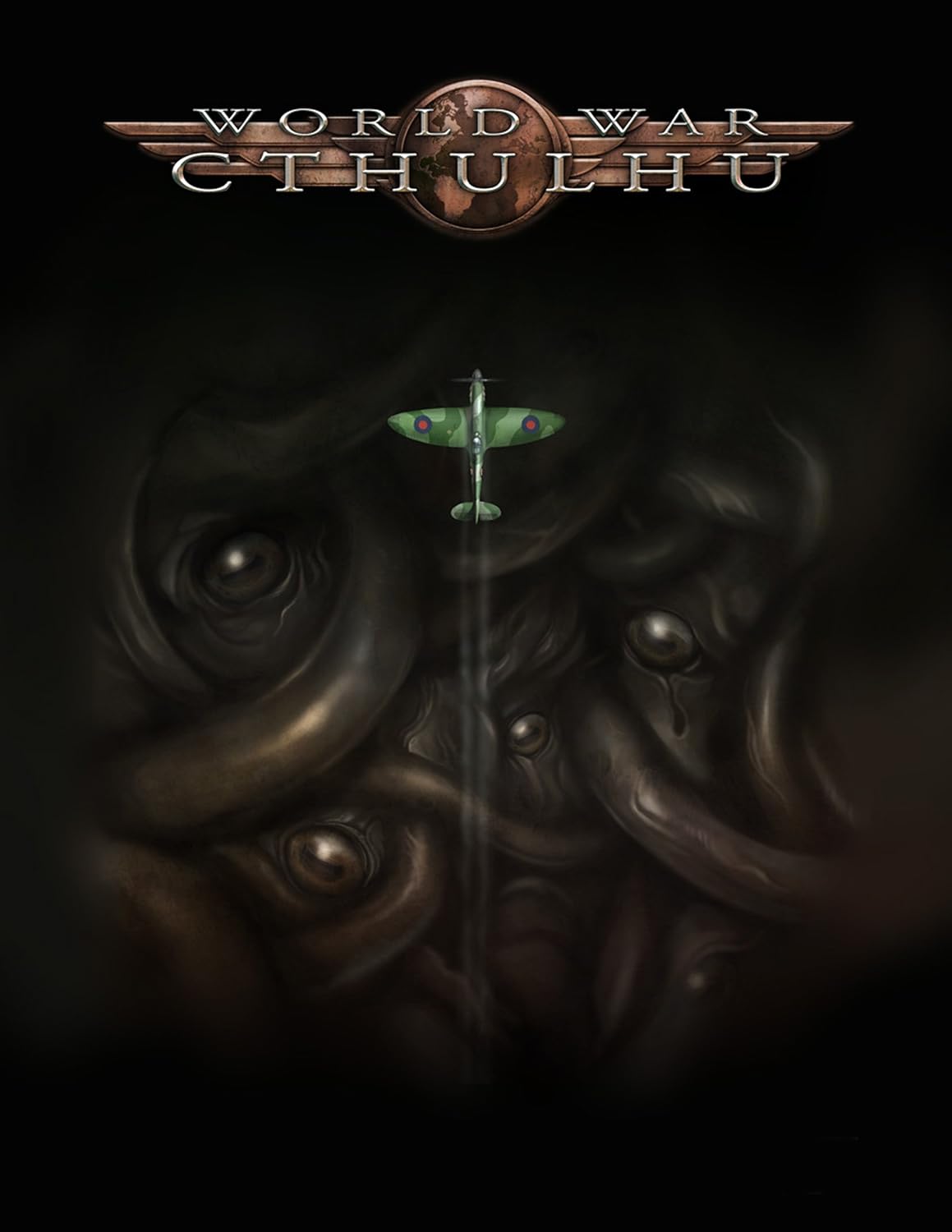
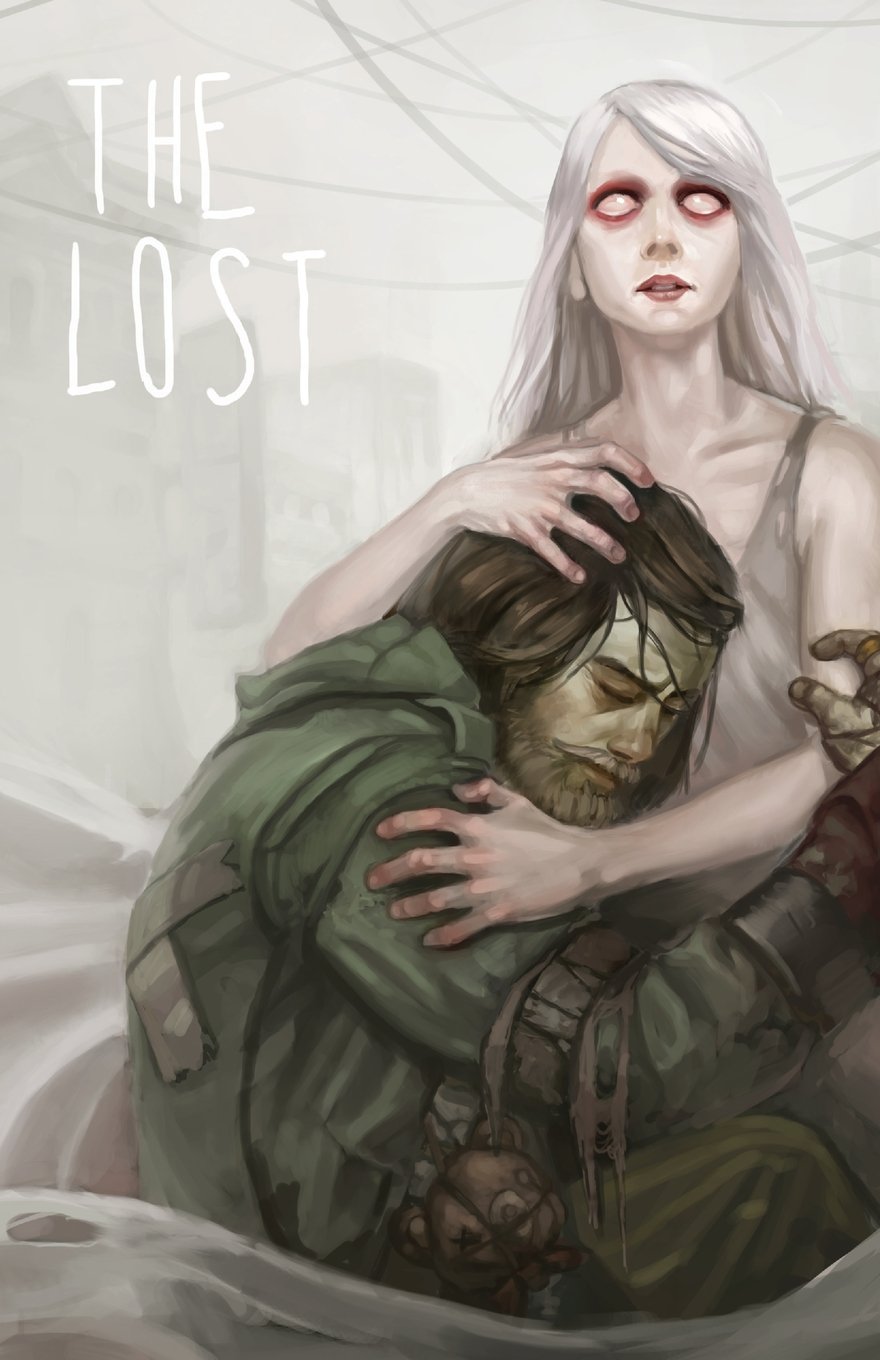


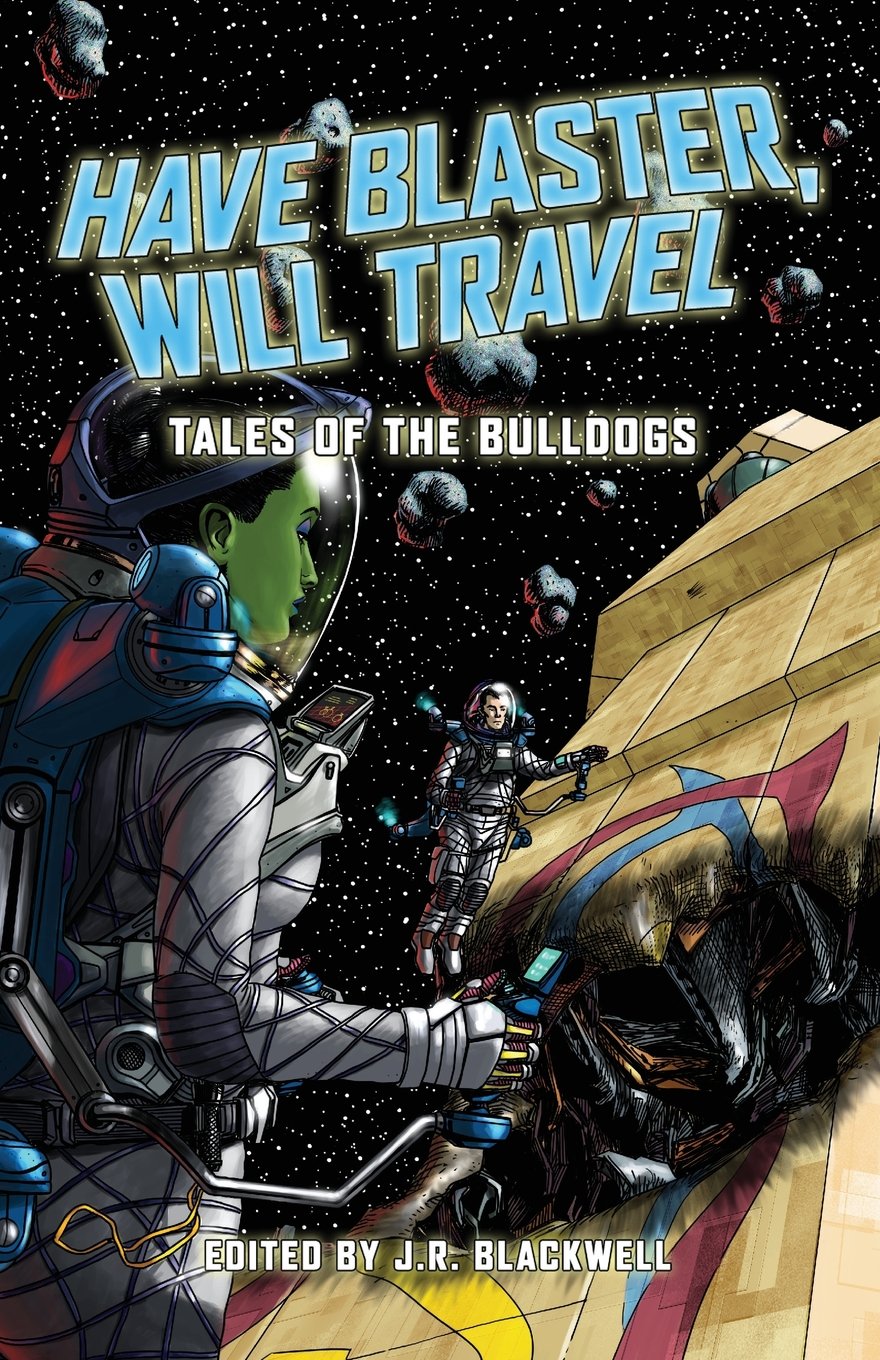




 Sarah Newton