Sex and the Seventeenth Millennium
 Thinking and writing about sex, sexuality, and the myriad issues of gender in the Mindjammer universe has been fascinating, and a task nowhere near finished. In the first novel, “Mindjammer“, published on the 26th October 2011, I’ve kept the portrayal of gender and sexuality fairly low-key – most of the characters don’t overtly contravene the prevalent 21st century gender binary, and sexuality is only touched upon indirectly. That’s been part of my general approach in the first novel to concentrate on parts of the Commonality which are more familiar to us as 21st century readers. It seemed to me in writing that so many aspects of life in the Commonality would already be very different from what we know today, that to present all aspects of life as different and divergent all at once might be too distracting. Was I right or wrong? No idea – but that was my approach.
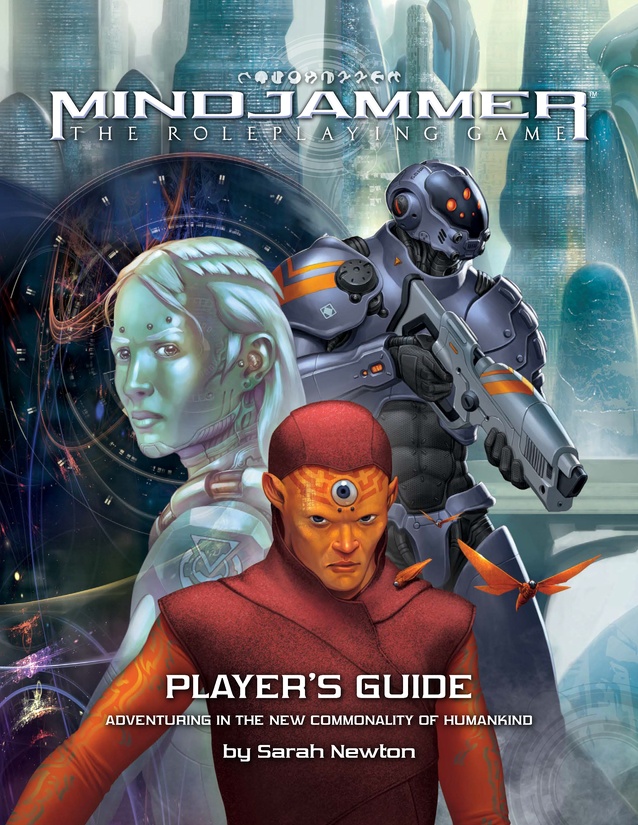
Even then, there are parts of Mindjammer where more diverse and multifarious identities and relationships (sexual, gender, or otherwise) can’t help but peep out from between the lines. Jackson Stark clearly has a relationship of some depth with Dizzy, the eidolon personality of his disintegrator rifle, presented as female – bringing an entirely new meaning to the phrase “I love my gun”; Wing, the Mindjammer sentient starship, attracts a great deal of admiring attention from admiring, lesser starships in orbit around Belomor – in Mindjammer, some starships really are sexier than others. Max Proffitt sometimes seems a Captain Jack of the Mindjammer universe, with a long train of more or less furious encounters across the Fringe, including his current best friend, the Rosemary Princess (yup, that’s a ship, too…); relationships between Ayumi Dentassi and her “husband” seem almost totally unbounded; and who knows what Monika Taimanishev does behind closed doors?
The point is, I guess, that when you set out to describe a society thousands of years in the future, so much is bound to have changed unrecognisably that you run the risk of not giving a contemporary reader enough “hooks” to hang his or her sympathies on. Alienness can be very alienating. But at the same time, if you’re going to achieve any kind of verisimilitude, you can’t ignore the fact that you’re describing a civilization which is as different from our own as today’s e-literate world is from our Ice Age hunter-gatherer ancestors. There’s a balance to strike – but not necessarily a balance that is ever going to be at all stable.
In the second Mindjammer novel, provisionally entitled “Transcendence”, I’m giving myself a lot more license to explore the alienness of the Commonality – to “get weird”. Mindjammer has already presented a universe which is freakishly different in so many ways, where physicality is no longer a stable part of identity, death no longer a given, relationships fluid, sexuality free from a biological binary; Transcendence pushes that concept much, much further. We’re going to be taking a look at Old Earth in some detail, and the “weirdness” of the Core Worlds, and also really exploring the implications of being a person, when perhaps the greater part of your early memories don’t even belong to you.
I guess one of the concerns about the upcoming 21st “biotech” century is the increasing role human beings are going to be playing in their own evolution. One of those concerns is the role of sex. On the level of physical and psychological pleasure, it’s hardly likely to die out soon; quite the opposite, even now it’s expanding and blossoming into newer and more complex forms. Sex, if you’ll pardon the expression, has never been so difficult to tie down. On the level of sexual reproduction, things are less clear: many futurists suggest reproduction is going to become a matter of conscious choice and design, with the “randomness” of sexual reproduction playing little part. To me, that sounds disastrous: the random element provided by sexual reproduction seems to be the crowning glory and defining characteristic of life on our planet, and we’d be foolish not to take with us its inherent advantages as we transfer our existences into less physical forms.
In Mindjammer, the society of the Solenine cluster, acting on a misunderstanding of Commonality culture, has chosen to decouple sex and reproduction, with explosive results. But even in the Commonality, the Core Worlds culture continues to promote in vitro reproduction with an ideological fervour, while the Fringe deals with sex and reproduction like it deals with everything – in a chaotic, messy, whirl of clashing “solutions” and ideas. The result: divergence. If sex is no longer necessary to ensure we reproduce, then the last link with biological necessity is severed, and everything is up for grabs. Just how far that divergence goes is something I want to explore in the Mindjammer novels.
Mindjammer is available now in trade paperback and ebook edition from Cubicle 7 Entertainment, Amazon.com, Amazon.co.uk, DriveThru, and hobby and game stores everywhere!
Find out more about Mindjammer at www.mindjammer.com.
Cubicle 7 Fiction – Announcing Mindjammer!

Cubicle 7 Entertainment kicked off its new “Cubicle 7 Fiction” imprint today with the launch of my novel “Mindjammer“, a far future transhuman space opera tale. It’s available right now from Amazon.com, Amazon.co.uk, and DriveThru, and shortly via iBooks and in trade paperback via direct sales from the Cubicle 7 Webstore and in hobby and games stores everywhere.
“Mindjammer” and Cubicle 7 Fiction are two huge things for me. The first, my first published novel, has been a labour of love and a topic I’ve been passionate about for years – the implications of technologies already in development now for the future nature of humanity and identity, and how we’ll deal with them. I wanted to write a novel of ideas, but in the style of the great, action-packed sci-fi tales – something which would carry you through with tons of action and excitement, and at the same time hopefully provide food for thought. Only time and (hopefully) the people who read “Mindjammer” will let me know if I’ve got anywhere near succeeding!
Second, Cubicle 7 Fiction is a project I’m incredibly excited about, as well as being highly invested in emotionally. Cubicle 7 Entertainment is first and foremost a publisher of roleplaying games and supplements, including such well-known lines as Doctor Who, The One Ring, Charles Stross’ The Laundry, Victoriana, Legends of Anglerre, Starblazer (including my very own Mindjammer), and many more. There are so many cool ideas and talented writers working on these lines, it’s a no-brainer to look into producing some quality fiction to support the games. When Angus and Dom at Cubicle 7 mentioned the cross-media possibilites of working with other companies in the Rebellion Group some 18 months ago, my heart skipped a beat: here was the perfect convergence of possibilities, and a huge potential to leverage Cubicle 7’s intellectual property in some hugely exciting ways.
Cubicle 7 Fiction is our first venture in this direction. We’re working very closely with our colleagues in Solaris Books and Abaddon Books, and they’re providing us with the benefit of their enormous talent bank and wealth of experience in editing, proofing, layout, and producing novels and anthologies as we create the new imprint. It’s my hope that with their help, and the support of game and genre fiction lovers everywhere, we can make this new venture into something wonderful – not only a line of titles supporting our roleplaying games and providing some great gamer reading, but also a range of great quality books in their own right, introducing some of Cubicle 7’s cool settings and IP to an entirely new type of reader.
You don’t have to be a gamer to enjoy Cubicle 7 Fiction. But we hope, whoever you are, you’ll find something in our upcoming titles you’ll like. Let us know what you think – this new fiction imprint will stand or fall by the support it receives from you, the reader. We hope you’ll like what you see!
And so, without further ado, here’s Mindjammer. Spread the word!
Cartophilia
I love maps. Always have. My first memory of one comes from a yonks ancient book called “Ant and Bee Go Shopping”, which I must have “read” when I was about four, a kind of antediluvian “Where’s Wally” with a mega-big cheery perspective map of a city centre where (you guessed it) Ant and his best friend Bee would indulge in some much-needed retail therapy. Great map: I remember poring over streets and buildings as I walked down them with my invisible insectoid friends.
But there was probably one earlier than that – a virtual map which lived at the top of Enid Blyton’s Faraway Tree, a kind of magical dial-a-destination to lots of mysterious and mad lands above the clouds. That was half a decade before I discovered Tolkien’s gorgeous maps in The Hobbit when I was 8 or 9, but by then there was already no looking back – I was a cartographic junkie.
What is it about maps that fascinates some of us so much? Sure there’s a romance about some maps – Merrie England, Ancient Rome, battles and explorations of yore. But I can get off on a route planner of Birmingham city centre, so I’m sure it’s more than just the romance. It must be… you’ve seen Birmingham city centre, right?
I think it’s because maps are stories. Let me rephrase that: a single map is by no means a single story; instead, a single map is a myriad of stories. Every place name, street corner, bridge, river, church, mysterious lane, quarry, or “ancient earthworks” is an empty potential space in our heads begging to be described – a kind of cartographical paint-by-numbers which our minds yearn to visualise, explain, visit. But not in isolation: when you look at a map, you don’t just look at a bunch of unconnected data – your eye wanders, lingers over some elements, moves questingly from one to another. And, as it does so, you begin to construct a narrative. Maybe it’s just a journey – you start at Arthur’s Howe, then your eye flits to Darkwood Chase, and quick as lightning you’re flying over the land between them like a flock of ravens, looking down on the winding lanes below you, wondering how to travel between the two. There’s a house, there, by the river – maybe a farmhouse? No! It’s a canal, not a river, and that must be the lock-keeper’s cottage by the weir, a vision of dray horses pulling a barge laden with coal and a blacksmith’s by the riverside breathing smoke like a plume into the chill hazy air on a winter’s morning…
Then you blink, and look up. Nothing around you has changed – before you there’s still the wide white expanse of paper covered with cartographical sigils. And yet it’s like you’ve travelled, been on a journey. The map is like a distillation of a world, there beneath your fingers, beckoning you in. It’s like the biggest “choose-your-own-adventure” book you can imagine, one of infinite possibility, infinite stories.
If I could only take one book to a desert island, it would be an atlas.
The Simulation Age
(Informally dedicated with thanks to the courageous folks of the Occupy Wall Street and other global “Occupy” movements – frontline warriors in the War Against Simulation.)
 I recently bought a frozen pizza. When I opened it, the pizza was half the size of the box. I felt cheated. Despite the fact that the wrapping was probably more expensive to produce than the pizza, the inexorable logic of the capitalist growth mantra meant that more and more profit had to be squeezed out of what was basically a pretty fixed paradigm: pizza of diameter X, sold in box of width Y, for price Z. Taken logically, the end result of this process will be a massive, gorgeous, whopping pizza box, with a tiny pill inside tasting mildly of pizza. And then the frozen pizza company will collapse.
Before that collapse, however, we’ll have entered the era of “simulated pizzas”.
This is a tendency I see everywhere these days. Even (damn my fuddy-duddy ear!) in popular music, where increasingly it’s the superfices of the pop music industry which are recreated before us – adoring crowds, super-lazorlight concerts, gorgeously pneumatic and sexed-to-the-max stars – while the substance, the musical content, degrades into a kind of vanilla blandness, mixed by professional muzoes in a slick corporate studio somewhere, to a tried and tested formula which will ‘get the kids going’. The music industry too is becoming a simulation of itself – and the consumer turns away, the money spent on it decreases, and so the business investment dwindles further. Eventually, music becomes a gorgeously glitzy 3 minute extravaganza of sex, lights, and dancing, but the tune is exactly the same as the last time. Simulated pop.
And even the news! In true Soviet, 1984 fashion, our news pundits peddle lies and distortions with little bearing on our experienced reality, so much so that I wonder who they’re talking to. Most of us living in the real world don’t experience an economic recovery; most of us don’t see a great mysterious overseas threat; most of us see massively higher day-to-day inflation than the laughably bogus government figures suggest; most of us aren’t that bothered about the pointless self-referential sensationalism the media invents to fill the “news hour”. So who are they talking to? They must have an audience in mind. And they do – a “simulated audience”, an ideal consumer of the fictitious broadcasts they invent. Simulated news for simulated people.
At the same time, the internet is burgeoning with news, music, art, blogs, thinking, all produced by individuals existing outside the pizza-box capitalist paradigm. People are awakening to our “simulated economy”, where those who work and pay tax get poorer, to the benefit of those – the bankers, the corporates – who break the laws, receive endless taxpayer handouts, and get rich. All around the world we have protests – online, Occupying Wall Street and other economic centres, a sudden solidarity in the face of a pernicious threat which is hollowing our lives from within, turning them into mere simulations of wealth, liberty, and happiness. We’re creating a direct route between creator and consumer, unmediated by an ideologically- and commercially-motivated “packager” sucking the value out of every transaction. The more the Simulation Age squeezes the life out of reality, the more reality turns its back on the Simulation Age and creates an alternative paradigm, leaving the Simulators to wither, and die on the vine.
When we write, we knowingly produce simulations: artificial realities, with a semblance of existence. But, beneath, what they say is true: psychologically true, emotionally true, philosophically true. We might be writing about fantasy worlds of elves and magic, or science-fiction universes of alt-humans and techno-immortals, or superhumans battling global villains and saving society from destruction; but, on a deep level, what we write has to be true – it has to be understandable, acceptable, meaningful to the reader. If our spacefarers don’t deal with life in credible ways, no amount of technobabble will make the tale ring true; but if their lives are believable, compelling, they tell us something about ourselves and our own condition, we as readers can handle any amount of artifice.
That’s a paradox. On the one hand, we have our modern post-capitalist frenzy, using the accoutrements of reality to create a scarcely believable simulation of that reality, from which people are turning away in droves. Then, on the other, we have modern-day fiction, using the accoutrements of simulation to tell believable tales of reality. We create myths and fictions to tell ourselves the truth.
And, like matter and anti-matter, when lies meet truth in the Simulation Age, they explode in a blinding burst of energy. But destructive or creative energy? There’s the rub. And that’s what we, as creators and consumers of our own stories, get to decide. And in the streets of cities all around the world, in online communities and physical world families and fellowships, that decision is being played out today.
There’s a lot to play for. Simulation or reality? Choose now.
Brave New World – The Journalistic Function
Yesterday I was surfing Amazon looking for latest thinking and theories on such diverse tekkie subjects as membrane theory, quantum decoherence, and interstellar travel. In my enthusiasm, I bought a Kindle eBook which looked very promising from the blurb, only to find when I fired it up and started reading it that it was a load of well-meaning but amateurish hogwash, and certainly nothing I could use as the scientific underpinning of some writing I’m working on. Curious (and somewhat embarrassed by throwing away money unnecessarily) I surfed Amazon further, and found a strange phenomenon I’d never really been aware of before: lots and lots of books with stupendously long and superficially very impressive titles, like “Transhumanism, Augmentation, Artificial Intelligence, Computerized Brains, Future Evolution of Human Beings”. Hardly catchy – but certainly up my street!
Then I looked further. In the blurb was the explanation: these books are compilations of articles from wikipedia.
What?!? I reeled for a moment. What?! Wow… I searched for words. What a… waste of money… what a – huge loss in reliability, trust, of the printed word. Allegedly scientific books – just compilations of unconfirmed wikipedia pages?
It’s become a truism in the second decade of the 21st century that the internet is filled with information, and most of it is rubbish. Now, with the advent of cheap and easy ebooks, which can be compiled almost by web-bot and published without the additional expense of layout, proofing, and printing, the electronic and online libraries and bookshops of the world are running the risk of becoming indundated with undifferentiated, unverified, bogus crap. All my life I’ve been used to going into a bookshop, online or not, and being secure in the knowledge that the selection I was seeing had been subject to at least a modicum of quality control.
No longer. Was it like this when the printing press was invented? When suddenly books, pamphlets, and newspapers could be easily and cheaply produced which were then dumped on an unsuspecting (and hence perhaps gullible) public?
To some extent it must have been. There must have been – indeed, there were – heaps of publications containing bogus (and often dangerous) health and ailment remedies, false histories, calumnies, and out-and-out superstition dressed up as science. How did we manage?
Of course, we managed because a class of “trusted aggregators” came into being – educated filterers of information, with integrity not to publish any old crap. People you could trust to do the job of filtering out the garbage for you. Call them publishers, editors, journalists, whatever, since that time they’ve fulfilled a very simple gatekeeper function: to make sure that any random tomnoddy with a mad idea can’t suddenly claim it to be true and hoodwink an unsuspecting public.
The internet today is in dire need of aggregators. Over the past 10 years or so I’ve relied heavily on Amazon reviewers to vet the usefulness of publications, but web-savvy indies are wise to that, and now frontload their stuff with heaps of positive reviews – the bogus book I bought had 8 out of 10 thoroughly encouraging reviews. We need something more.
When I buy an iPad app, I go to one of a number of application aggregator sites for a review first. If it ain’t there, I’m unlikely to buy it. My gut feeling is that there is a huge niche – nay, a gulf – opening up in the internet right now for precisely that kind of *journalistic function* to sift through the piles of dross for the gems, and compile them and offer them for sale. In a world of free information, that’s your “value-add” – the ability for someone, say, who’s an expert in astrophysics to sift through the net and provide regular digests of the best that’s out there. It would be a massive time-saving for those of us who don’t have the wherewithal or knowledge level to do it ourselves (hey, I *love* pop astrophysics, but I simply *can’t* differentiate between cutting edge theories and well-disguised bollocks at the top level). I’d happily pay for that journalistic function.
So – IMHO that’s what I think we’ll see emerging right now and in the immediate future on the net. Paid aggregators – a new generation of journalists, specialists in their fields, building reputations for integrity and trustworthiness, selling digests and summaries of the amazing knowledge floating out there in the World Wide Brain, often swamped by the collective mutterings of humankind.
Now – I just need to find one who can tell me about hyperspace… 😉
So I played HeroQuest 2…
After almost a year of owning the HeroQuest 2 rules by Moon Design Publications (published by Cubicle 7 Entertainment), today I sat down and actually played a session.
 I really liked it.
I’ve been a Glorantha fan since 1981, first playing tons of RuneQuest 2 and 3, then moving on to loads of Hero Wars, then a certain amount of HeroQuest 1, until about 6 years ago, when I moved onto other games such as FATE, BRP, etc, for my main games. I bought the HQ2 rules late last year, and on reading them found them extremely different from traditional RPGs – different even from HQ1 and more narrative type systems such as FATE – but felt somewhere inside there was a really cool system, if only I could grok it.
It’s taken me two tries to get my head round the system, but after our first session of play I’m getting there, and will definitely play again. My original gripe with the HeroWars and HeroQuest systems was that they were too arbitrary – very often the system seemed to revolve around the GM making up some numbers and everyone rolling dice, and then the GM kind of making up an explanation for what had just happened. Okay in the short-term, but ultimately unsatisfying, especially when it comes down to character life or death.
My first encounter with the HeroQuest 2 rules last year reinforced that impression. With no fixed numbers for the difficulties of die rolls, everything seemed to revolve around GM fiat, which isn’t my personal favourite style of play.
Then I got my head round the pass-fail cycle.
This is a really clever rules mechanic, and utterly, utterly different from anything I’ve seen in any other roleplaying game. In fact, it’s *so* different it often meets with some hostility among more traditional RPGers, including, at first, myself. That is, until I grokked how closely it’s tied in to the rest of the system.
For those unfamiliar with the pass-fail cycle, it provides GMs with a base difficulty level for pretty much *all* rolls in a given session (the GM can override). That’s right: every task you attempt, subject to GM override, has the same difficulty level. You’re not rolling your ability against how good a given opponent or tasks is; you’re rolling against the *story*.
That’s a huge departure from traditional RPGs. Sure, many GMs kind of wing this concept and factor it into their eyeballing of difficulty levels in play in other games, but in HeroQuest it’s codified into the rules. You make your die rolls against the demands of the story, not the abilities of opponents.
But if all difficulties are the same, isn’t that dull? Too bland? “Unrealistic”, even in a story sense? Here’s where the pass-fail cycle gets clever: the base difficulty is *adjusted*, based on whether you succeeded or failed in previous die rolls. If you’ve been succeeding in the story challenges you’ve been facing, then gradually the difficulty increases; if you’ve been failing all the time, gradually the die rolls get easier. The pass-fail cycle gives you a baseline difficulty, and a way of dancing around that base difficulty, up and down, in the interests of dramatic structure.
Let me give an example. In a traditional roleplaying game, when you build a scenario, you structure in a certain progression in encounter difficulties to make for a satisfying game. This is something you do explicitly, as game master, as part of your scenario design. So, you’re attacking a Lunar camp to rescue some prisoners in the RuneQuest (d100) game. Maybe you build in 4 encounters. First, you have a relatively easy combat with some guards as you break into the camp; then maybe a harder encounter as the Lunars raise the alarm; then there’s a tense bit while you try to free the prisoners; then a massive, climactic encounter with the Lunar commandant making sure you don’t escape. All great, but the key issue is: the progression of difficulty levels is determined by the GM at the moment of scenario writing.
In HeroQuest 2, this progression is determined by the *rules*. You try and break into the camp: the base difficulty is Moderate. Depending on how well you do, the encounter as the Lunars raise the alarm may be *easier* or *harder* than Moderate. If it’s easier, maybe after the initial hard fight you find a secret way to the prisoners’ cells; if harder, maybe the initial guards were a pushover, but they alert the entire camp who stand in your way. The actual description of the scenario derives from the pass-fail cycle rules. Then again, if you’ve had an easy time of it so far, actually breaking the prisoners out becomes very difficult: maybe they’re heavily defended, or the lock on their cells is something extra special. Finally, the climactic encounter has special rules all of its own, so that even if its mechanically not a high difficulty level (such as if the characters have been suffering heavily so far), the consequences will be significant and far-reaching anyway.
That really is so cool. I found it so neat to play, despite my initial unfamiliarity. My one worry was: “um, Moderate resistance is very low for most characters – this game is going to be too easy!” Then, I did the pass-fail cycle and worked out that the *next* encounter for the PCs is going to be not Moderate but High – more powerful opposition, evil monsters, nefarious sorceries, whatever.
 Make no mistake; the HeroQuest 2 system requires a major re-grokking of just what a roleplaying game is, and it definitely won’t be to everyone’s liking. As a player you’re engaging with the *story*, not with the statistical parameters of, say, certain monsters or opponents. Most of the onus to work with the new and often alien concepts, however, falls on the GM; the experience is quite transparent to the players, with a few exceptions.
I took up HeroQuest 2 because of the superlative quality of the supplements Sartar: Kingdom of Heroes and the Sartar Companion – I really wanted to play them! – and my deep and lasting affection for the Glorantha setting. After my first session, I’m already looking to the next, and exploring some of the ramifications of these extremely interesting rules.
Fantasy Con 2011
Wow. I’ll say again: wow. Never before have I seen so many horror, fantasy, and science-fiction luminaries packed in such close quarters and being so awesomely friendly. Brian Aldiss, Ramsey Campbell, Gwyneth Jones, Peter Atkins, Joe Abercrombie, Sarah Pinborough, and simply hundreds of other writers met up in the Royal Albion Hotel in Brighton this weekend for the annual British Fantasy Society convention, or, simply, FantasyCon.
It was as hot as hell. The UK has just been treated to an Indian summer hotter than July and August combined, with temperatures hovering around 30 degrees C, which in southern English coastal resorts, constructed in the glory days of the late 19th and early 20th centuries when air-conditioning was a question of “log fire or no log fire?”, conditions indoors were truly torrid. Happily the intellectual and creative temperatures were soaring too, so there was plenty of room to forget the trials of This Mortal Coil and drift off in flights of fantasy and speculation.
As “Mindjammer”, my first novel, is due out later this month, over the summer it dawned on me I should really get my sorry ass off to a genre fiction convention and start working out how it all works. For the past three years I’ve been a keen convention-goer on the roleplaying game circuit, and have really enjoyed the camaraderie and cool gamer experiences such as seminars, panels, workshops, running and demoing games, and really getting in touch with people who both make and buy games. Conventions are the lifeblood of the RPG industry, and I was curious to know if the same applied to genre fiction too.
Turns out, completely by chance, that I’d signed myself up for the industry genre fiction convention. Everybody was there, and as soon as I’d wombled up with a shy and hopefully amiable smile, everyone was totally awesome in introducing me to people, showing me the ropes, and making This Helpless N00b feel really at home. By the end of Day One, I was exhilarated, stimulated, daunted, encouraged, challenged, and (finally) half-dead on my feet with the back-to-back brilliance of the schedule.
So, what went on? Well, first up, Fantasy Con was considerably smaller than a typical RPG con – probably about 500 attendees in total. Spread over 3 days (or, really, one full day and two half-days), it occupied about 7 rooms of various sizes in the Royal Albion Hotel. The attendees seemed pretty evenly divided between industry folk, including writers, editors, agents, and publishers, and fans / readers / customers / what-have-you. It’s a bit of a false divide, as pretty much all of the writers and industry folk are *also* fans!
The schedule was intense, back-to-back, and ran from 10am to 11pm and beyond, including: panel discussions; interviews; book launches; signings; readings; film-screenings; and a mega 80s disco Saturday night and the BFS AGM and Awards Ceremony & Banquet Sunday. There was so much going on, it was impossible to see and do everything I wanted, so I had to make some pretty gruelling choices: listening to a reading you really want to attend, or go to a panel discussion about marketing yourself as a novelist? Aaaaargh! Impossible! Noooo! 🙂
But, like RPG cons, a helluva lot of the really crucial stuff happened in the cracks in the schedule – those little space-time crannies in the corridors between events, in the bar, the restaurant, in smokers’ corner, or just colliding in the warrenous (New Word (c) Sarah Newton 2011) undercrofts of the Royal Albion. Those moments were truly brilliant: a half-hour convo about the nature of history with the lovely Rob Shearman and Jasper Kent on a staircase carpeted from hell just after Rob’s goose-bump reading from “Everyone’s Just So So Special” (and an opportunity to pay obeisance to Rob for That Dalek Episode); a chance to say thanks to Jo Fletcher for the very welcoming “History of Fantasy Con” presentation; and a succession of mutually-encouraging and inspiring chats propping up the bar with the squee-makingly delicious Scott Andrews, Gaie Sebold, Anne Lyle, and many others.
It’s useless to list any more names: *everyone* was there, and *everyone* was lovely. I came away frazzled and inspired, with a hunger for much, much more. Now, I’m hoarding pennies and for the first time in my life looking longingly at Prestatyn (come on, we’ve all done it!), as the SFX Weekender looks like the next shot-in-the-arm for this increasingly hopeless convention junkie.
Thanks to everyone for organizing, attending, and supporting Fantasy Con, and making it such an ace experience. And a special thanks too to Jon Oliver, Mike Molcher, and Jenni Hill of Solaris / Abaddon for letting me tag along and introducing me to everyone and everything – I owe you guys a ton of drinks!
See you at the next one!
Best,
Sarah 🙂
Moving the Meme Machine
It’s with not a little sadness that I’m bowing to the inevitable and moving my old “Meme Machine” livejournal blog here, to live with my other pages at sarahnewtonwriter.com. I’ve been using the Livejournal blog for the best part of 3 years, but it’s increasingly become a bit of a blogging backwater, and without decent site stats or crosslinking functionality, I’ve decided to stop updating that site and move my blogging activities here.
On the flipside: hurrah! Finally everything’s in one place, and if you subscribe to this site you should see some action at last as I make weekly updates here. I hope too if you followed the Livejournal blog, you’ll join me here too as I ramble about anything from sheep-slaughtering to RPG design, novel-writing to writers’ and game conventions. Thanks for reading!
Huge gamer and writerly hugs and grins 🙂
Sarah
Mindjammer – the Novel
 Available October 2011!
Cubicle 7 Entertainment Limited is proud to present Mindjammer, the first novel in its new line of genre fiction. By ENnie award-winning RPG author Sarah Newton, it’s an action-packed tale of mind-bending technologies in the unimaginably far future, as the human race struggles with itself to fulfil its own destiny.
In the seventeenth millennium, the New Commonality of Humankind is expanding, using newly-discovered faster-than-light travel to rediscover lost worlds colonised in the distant past. It’s a time of turmoil, of clashing cultures, as civilizations shudder and collapse before the might of a benevolent empire ten millennia old.
In the Solenine Cluster, things are going from bad to worse, as hyper-advanced technologies threaten to tear its societies apart. Thaddeus Clay and his special ops team from the Security and Cultural Integrity Instrumentality are on the trail of the Transmigration Heresy. But what they find is something beyond even their imagining – and something which could tear the whole Commonality apart!
Available October 2011 in trade paperback and ebook edition from Cubicle 7, Amazon, RPG Now, DriveThru, and hobby and game stores everywhere!
Starblazer Adventures Player’s Guide
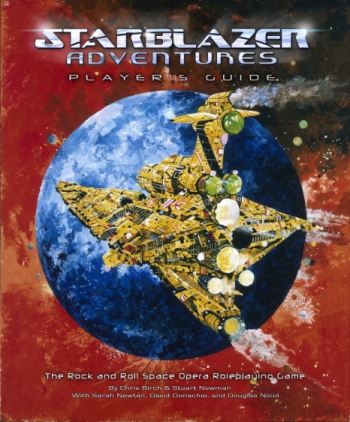
Coming Autumn / Winter 2011 – an all-new edition of Starblazer Adventures!
Starblazer 2nd edition is a complete re-edit and update of the first edition rules. Completely backwards-compatible, it incorporates rules innovations from Legends of Anglerre and has been revised and re-edited throughout. It’s currently in layout, and expected to hit the shelves this autumn / winter.
Written by Chris Birch, Sarah Newton, Stuart Newman, and Mike Olson.


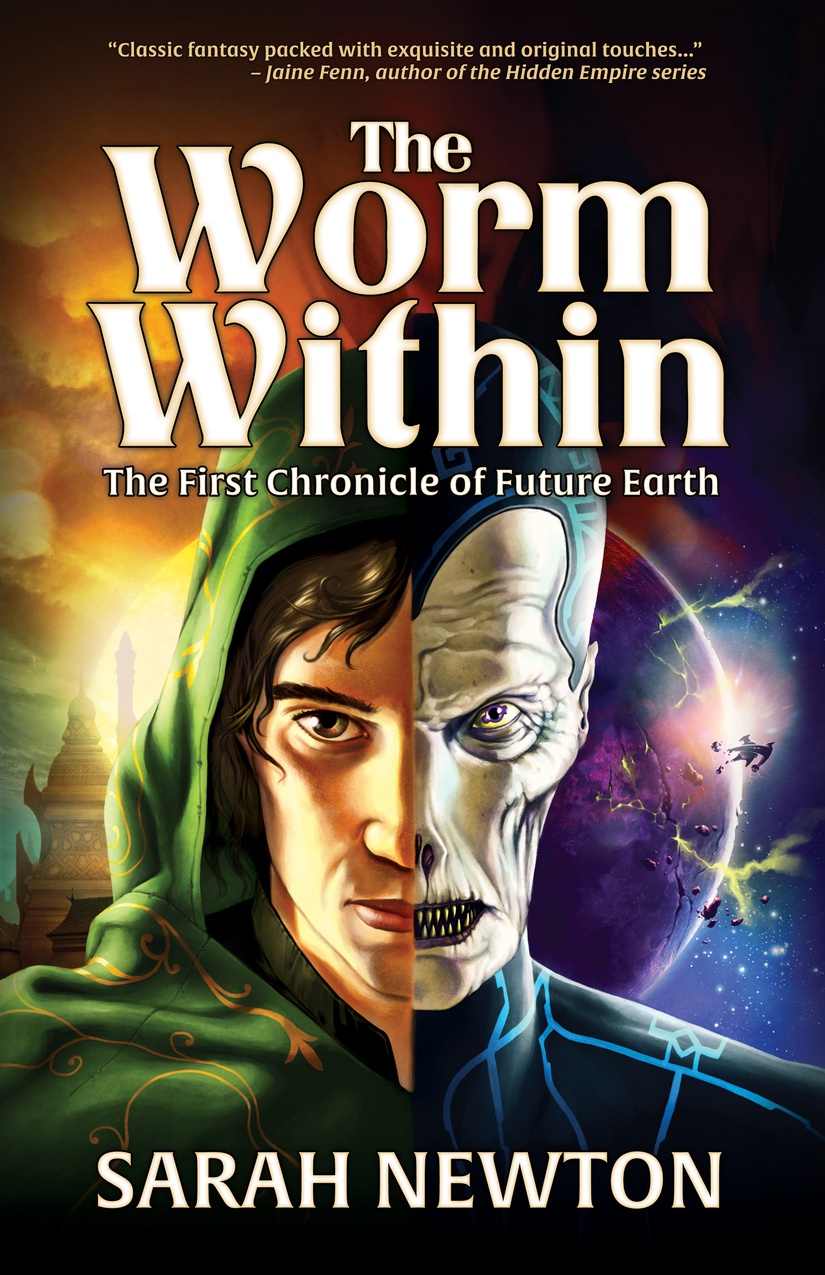













 Sarah Newton